I love maps and always have.
I recall, as a boy, visiting Philip Son & Nephew, a bookshop and stationers in the warren of streets in Liverpool city centre. It was laid out over several floors in , what I recall, was a narrow building. Certainly taller than wide. My mum and dad bought me my dictionary for school there. Up on the top floor, reached by a narrow staircase, was a room full of maps.
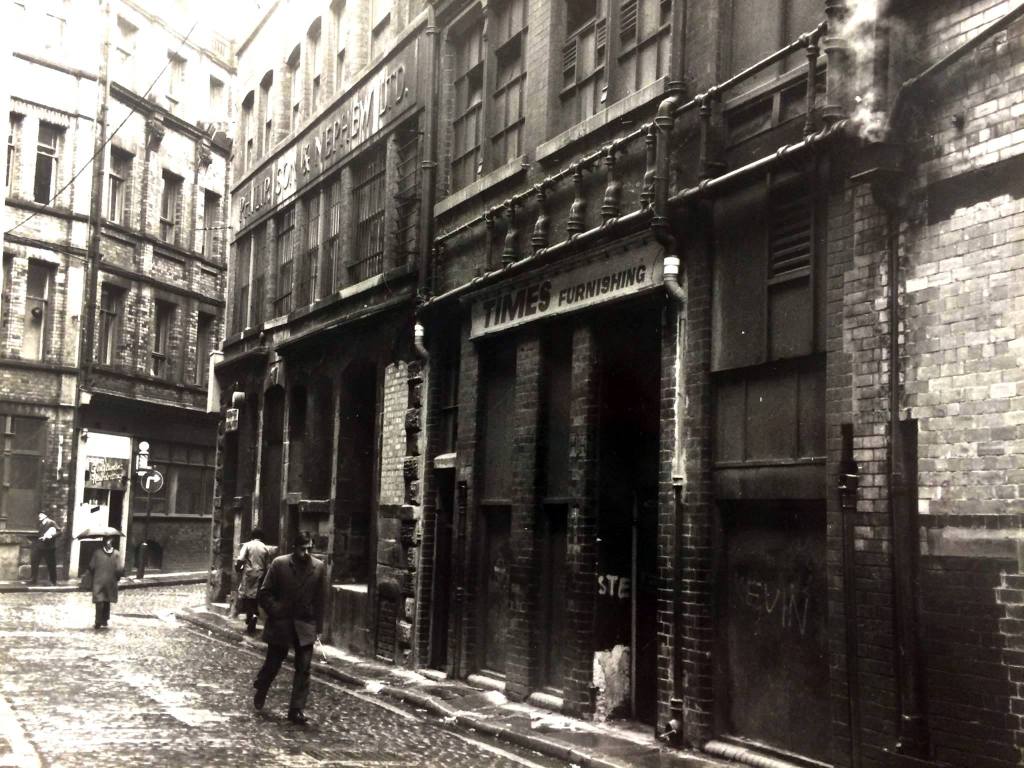
The maps ranged from local town plans through Ordinance Survey to World Atlases. I was fascinated by them all and, in particular, was drawn to the global atlases with their pink and green and yellow countries. Perhaps this was the start of the wanderlust. A seed sown in a Victorian building in Liverpool.
Wherever and whenever that seed was planted, Pat and I are now traversing Central America in what will be a sort of figure of eight. When leaving home, we didn’t know if our trip would extend beyond Panama and Costa Rica. You read all the time of troubles in this region of the world. Political and social turmoil arising out of economic or other tensions. All of Nicaragua, El Salvador, Honduras and Guatemala have had their issues over relatively recent years, with Civil War in some of them over the past 10 years. We knew that the pandemic, and more latterly, the global economic crisis will have had effects and it is during such times that social unrest can rear its ugly head.
We decided to play it by ear and pump other travellers we might meet, with recent (immediate) experience, for advice. It turns out there are no problems. The locals are extremely friendly, engaging and accommodating. So, the trip is on.
We spent a few days in Liberia, Costa Rica, to break the journey. The trip from the Caribbean coast at Puerto Viejo, in itself, involved a couple of 6 hour bus rides via San Jose. We will be back here to meet a friend joining us for a couple of weeks in February.
We crossed into Nicaragua on the day of the World Cup Final. We were up and at ’em early so as to get to Granada before kick off. The only problem was that we hadn’t realised the match was starting earlier than the semi finals and was in full flow as we approached the border. We were able to look over the shoulder of a lady who had a feed on her iPhone on the chicken bus on the way to Granada.
Ah! Chicken buses. For those that have not travelled in this part of the world…These are old US school buses which have been pimped and re-purposed as local transport. The name apparently comes from the fact that locals carry everything on board with them, including chickens. I am assured that it does not have anything to do with the game that the drivers play with oncoming traffic as they hurtle from town to town. But it could be. Get the picture!
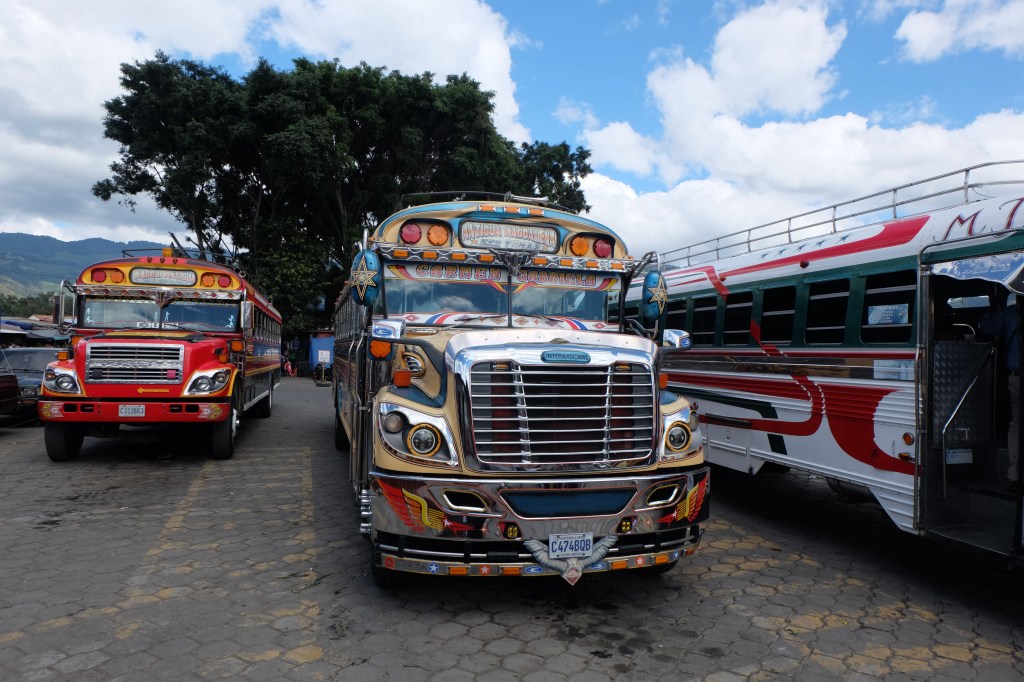
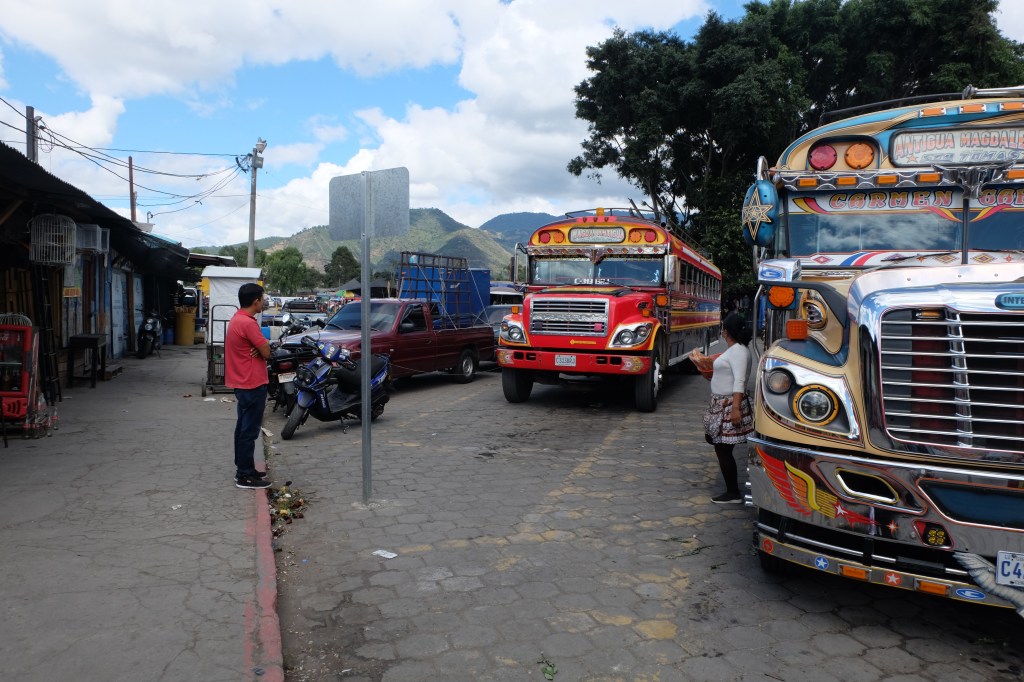
Not everything goes on board. Travellers backpacks and other heavy luggage has go on the roof. This caused Pat to have kittens about security. Convinced that our bags would not be there when we alighted in Granada, it was not the most relaxing of journeys. Hey ho! They were there at journey’s end and our Nicaraguan adventure continued without us having to purchase replacement clothing.
Granada is a Spanish colonial town on the shores of Lake Nicaragua. It claims to be the first European city in the Americas, founded in 1524. Like many similar cities it is low rise and although once a “white city”, reminiscent of Andalusia, is now very colourful with the house facades painted in an array of colours.
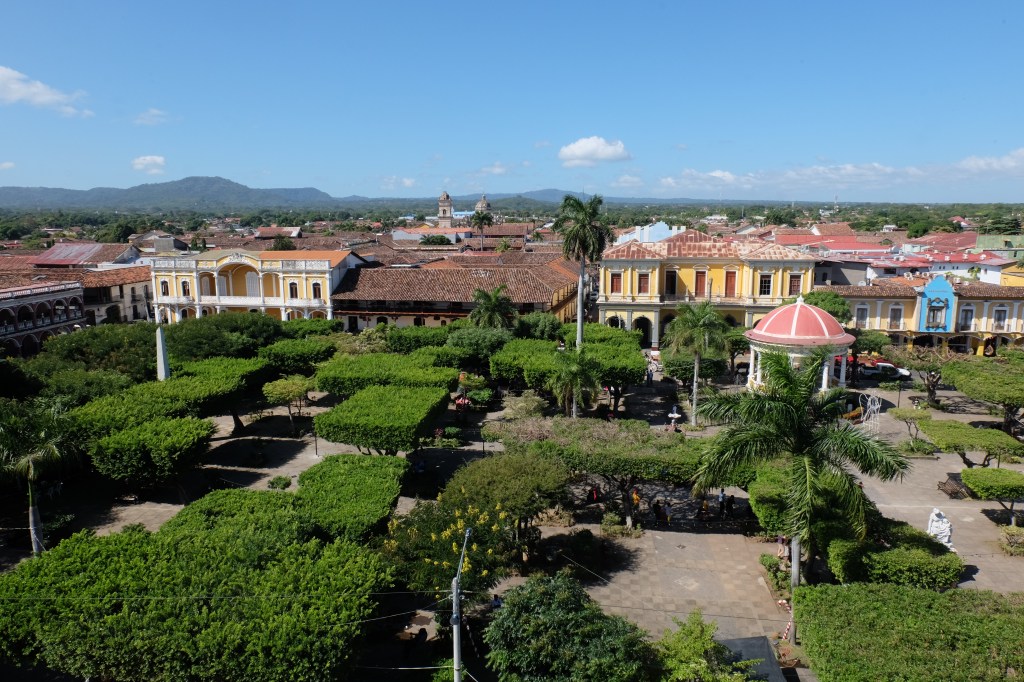
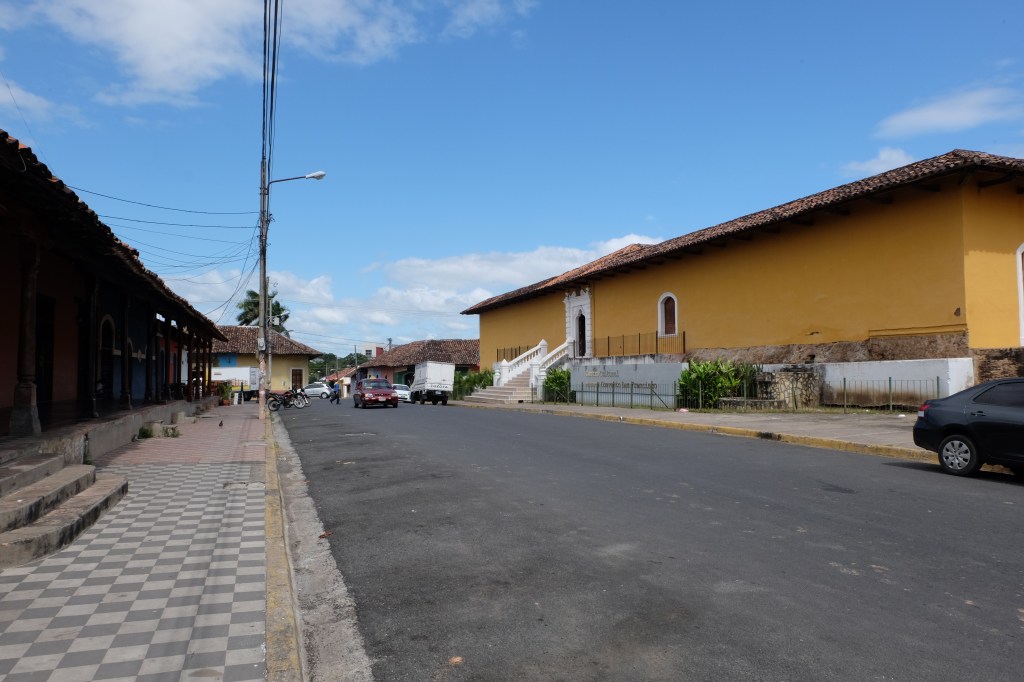
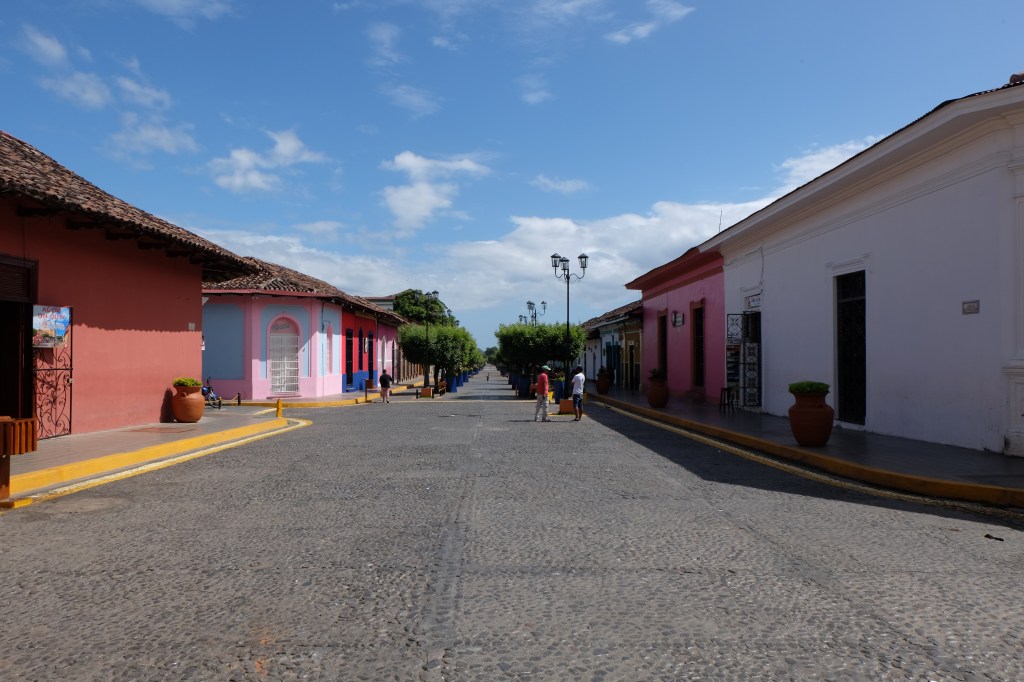
I would definitely describe it as ‘shabby chic’. In one street, behind the cathedral, they have recently pedestrianised and fitted out an area of bars and restaurants, which comes alive in the evenings.
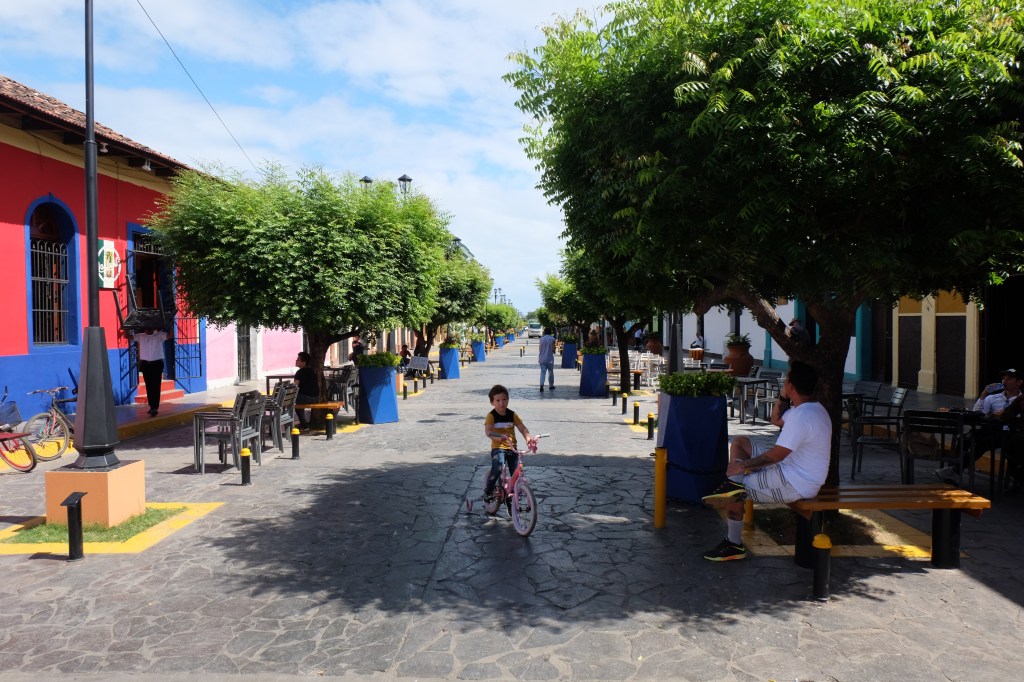
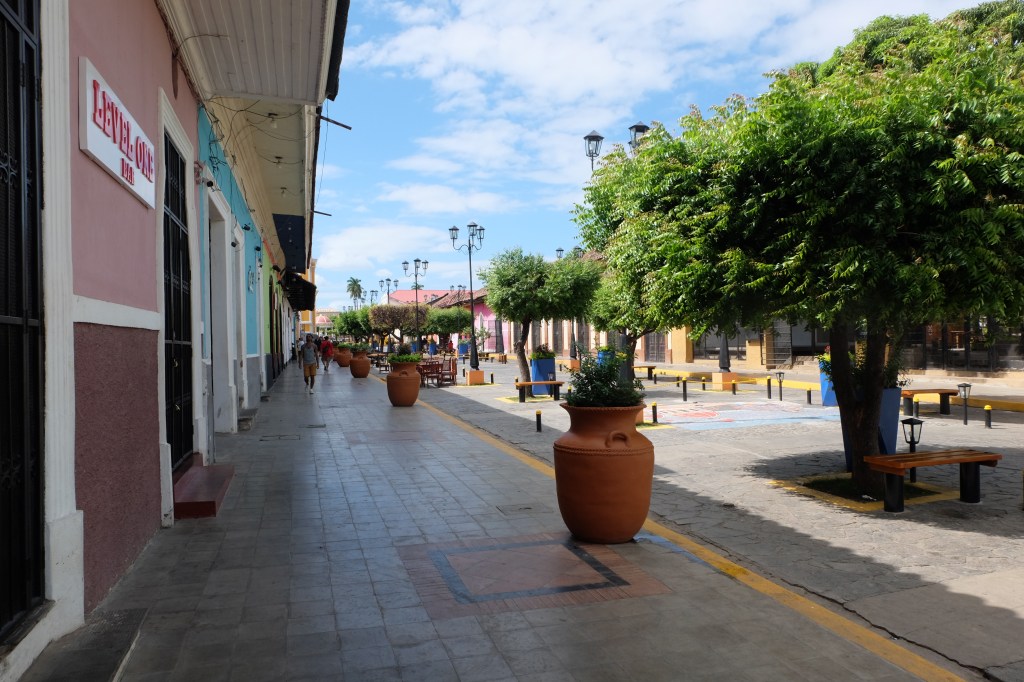
Nearby are the 365 islets that were formed after a particular volcanic eruption. These are home to fisher families and some have been bought and developed by some of Nicaragua’s great and good. Others remain in local ownership and they offer refreshment to passing tourists.
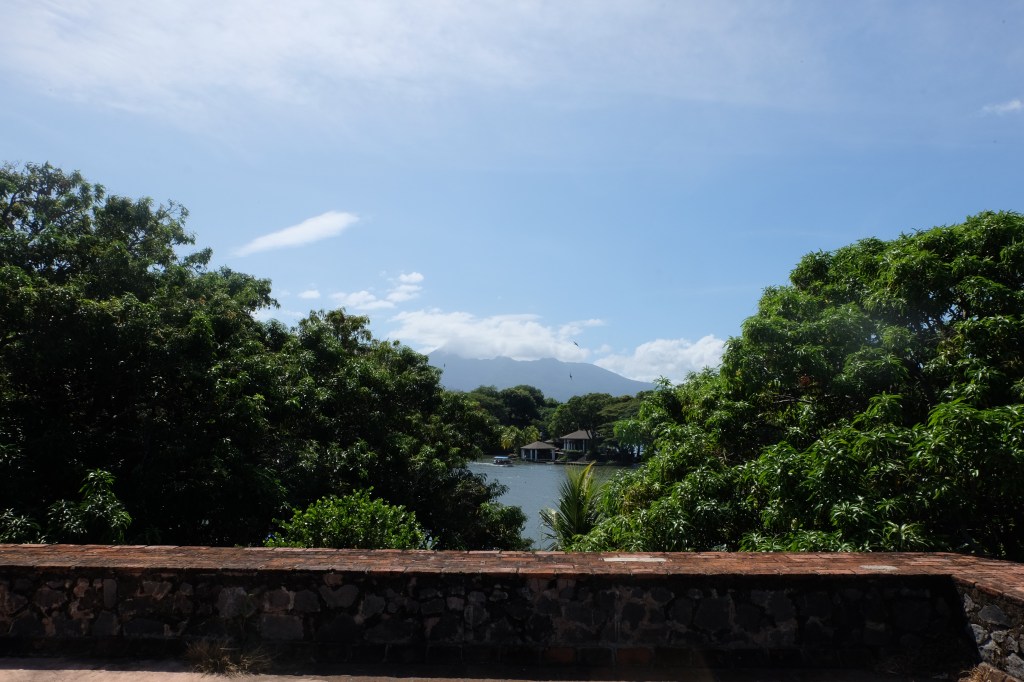
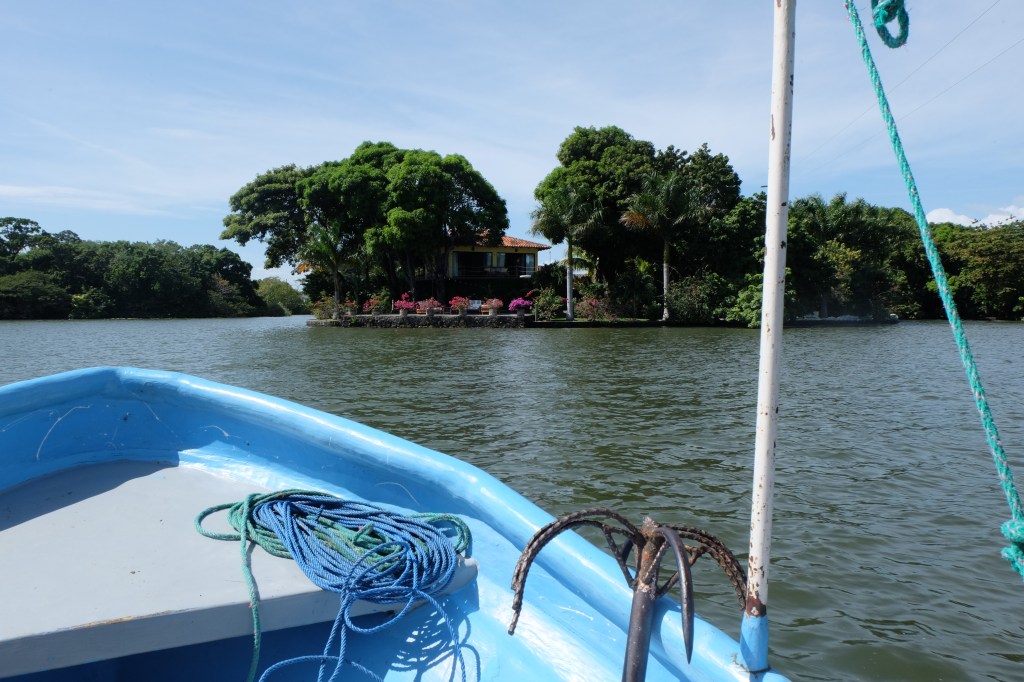
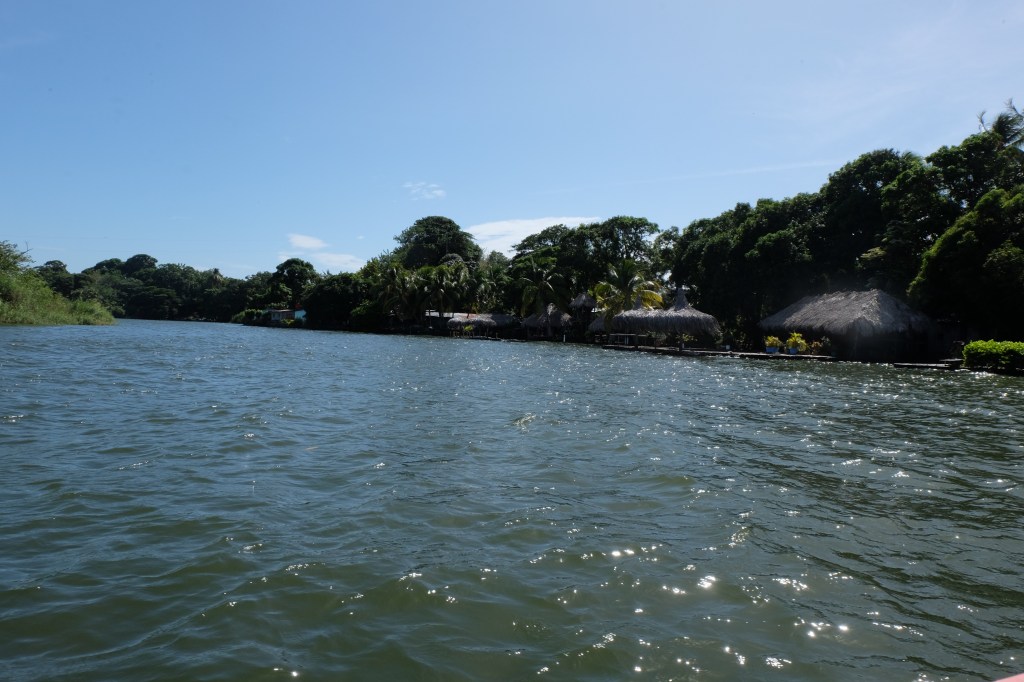
Granada is close by a couple of volcanoes, Mombacho to the south and Masaya to the west. The trek up the former was, we were assured at the tour agency, an easy trek to the rim. On boarding our mini bus, the next morning, our guide helpfully informed us that we would be ascending from 750 metres to 1050 metres in the course of a 3 mile walk. This was not going to be our usual Sunday afternoon walk around Knaresborough, and somehow, I doubted that there would be an equivalent of The Half Moon to break the journey with a few libations. I was to be proved right. Pat decided not to attempt the climb and opted to join a group of primary school children and their teacher on the transport to the top.
I set off with my guide. About 300 yards in, the walk took a turn for the worse. Literally. Upon reaching the first turn in the road, after a gentle slope, the gradient increased to what can only be described as vertical. I made it to the top, after numerous stops to ‘take photos’, although the guide sussed this ruse for a rest as the route was entirely in the trees and I had no camera with me.
Pat had been assisting the schoolteacher with getting her pupils to practice their English. If you come across a group of travelling Nicaraguans at any time, speaking in a slight Scouse twang, you’ll be able to guess which part of Nicaragua they are from.
The climb proved futile as the cloud obscured any views of the rim or into the crater. Lucky I didn’t bring my camera!!
We spent Christmas in Granada and the town certainly brightened the central plaza for the occasion.
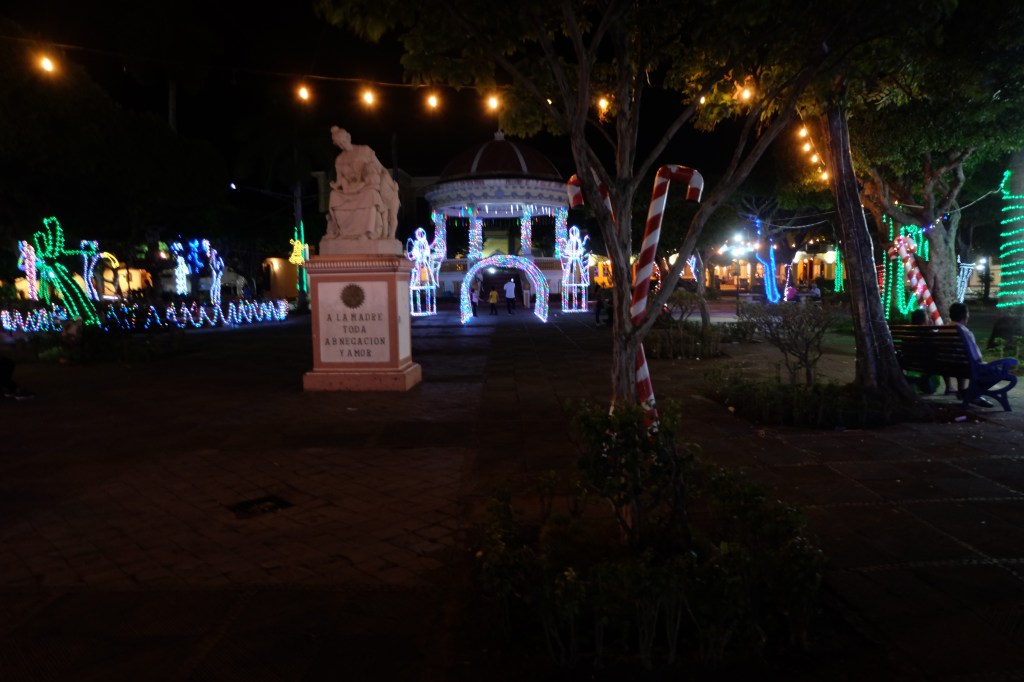
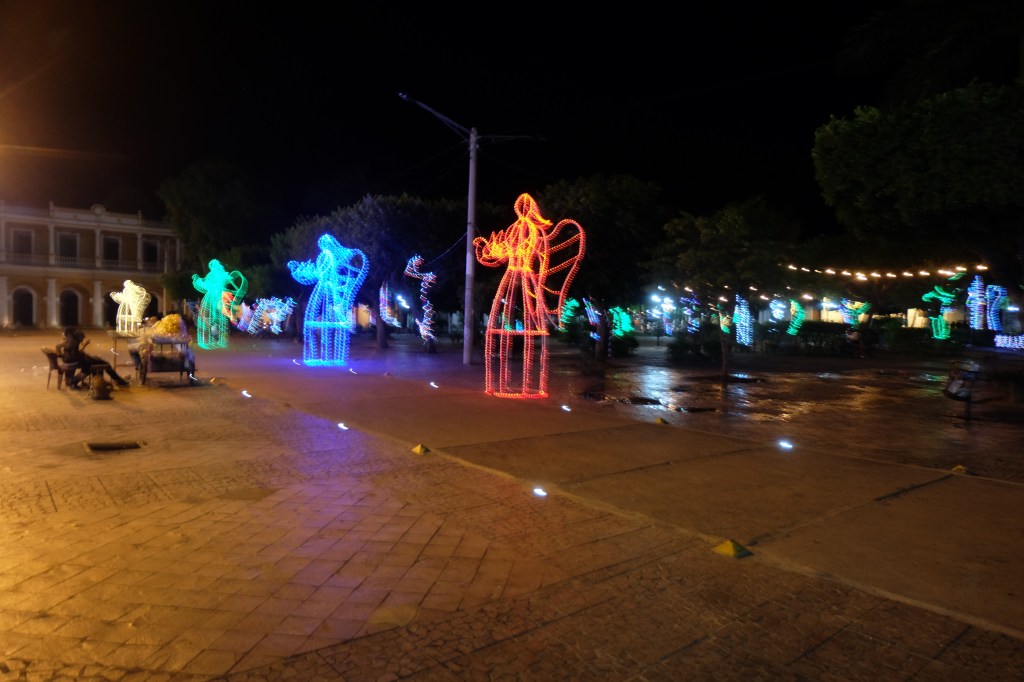
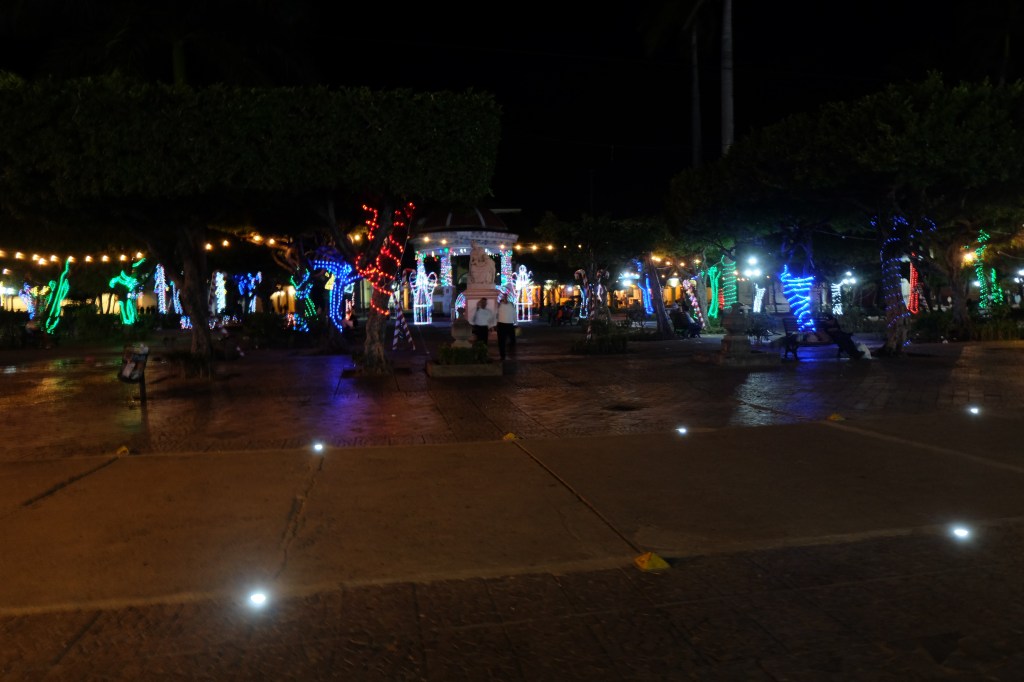
Granada and Leon have a history of rivalry for supremacy. Indeed, Managua was made the capital to settle just such arguments. We had decided to spend the New Year in Leon and the intervening period after Christmas at the beach at Las Penitas.
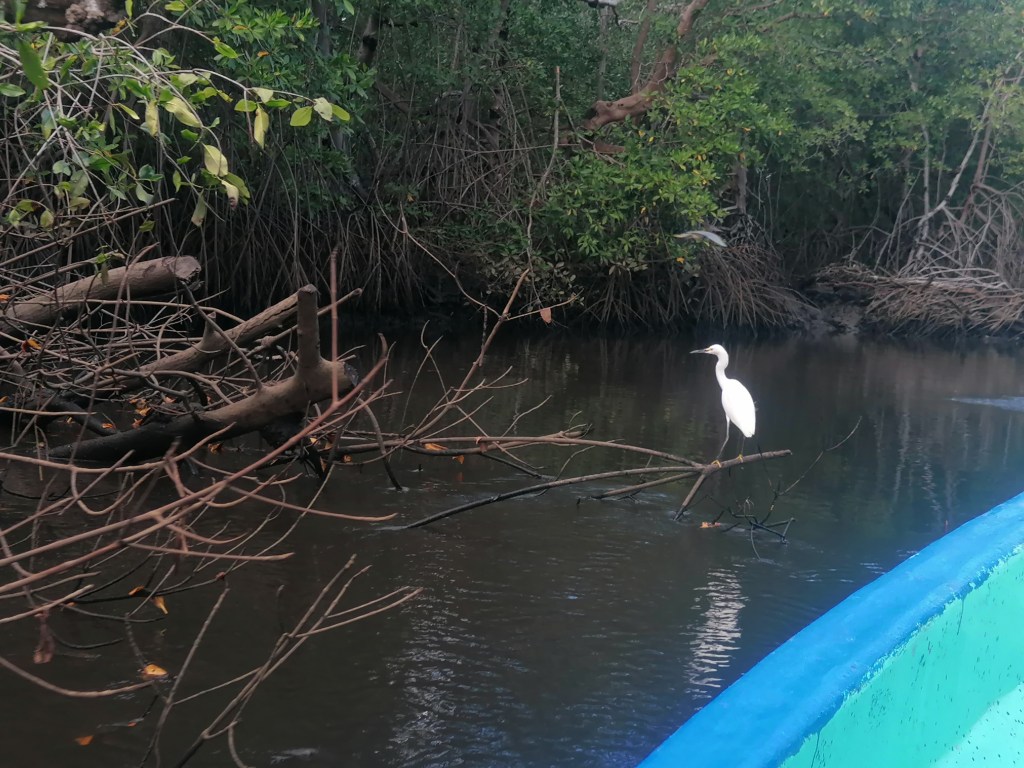
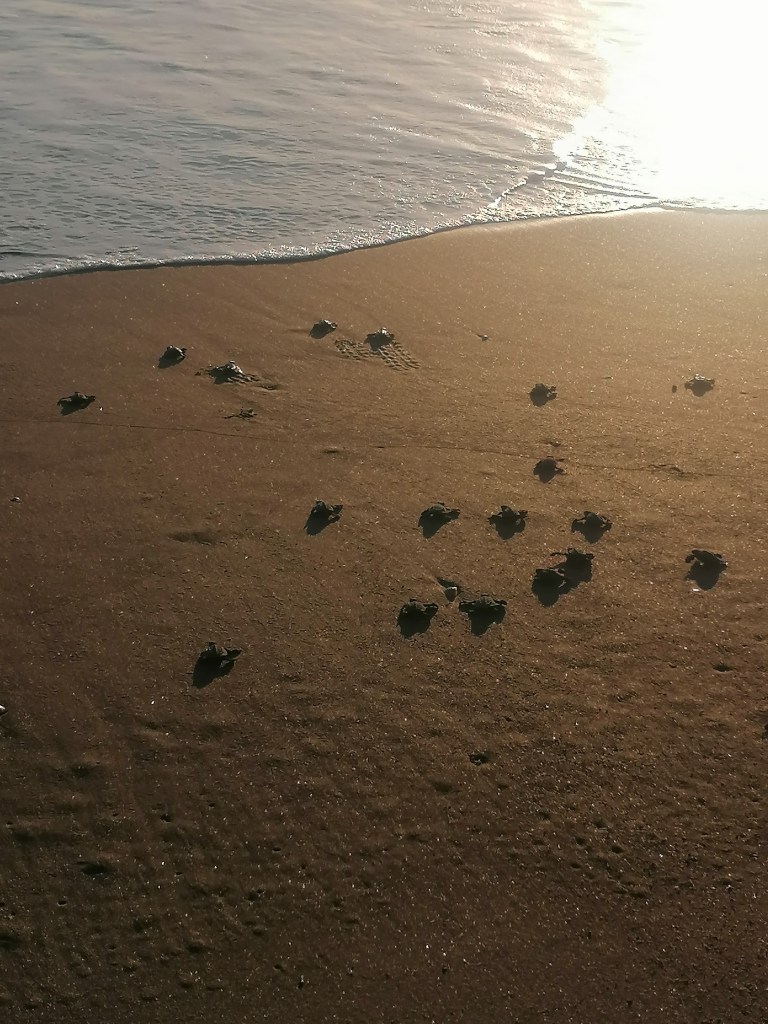
Our beach stay was very relaxing, albeit that the ‘resort’ of Las Penitas is very run down. We also took the opportunity to sail though the nearby mangroves, experiencing a varied wildlife, ending on the beach to see the release of thirty baby turtles. They’ll come back to this beach throughout their lives, to lay their eggs, starting in about 12-15 years time.
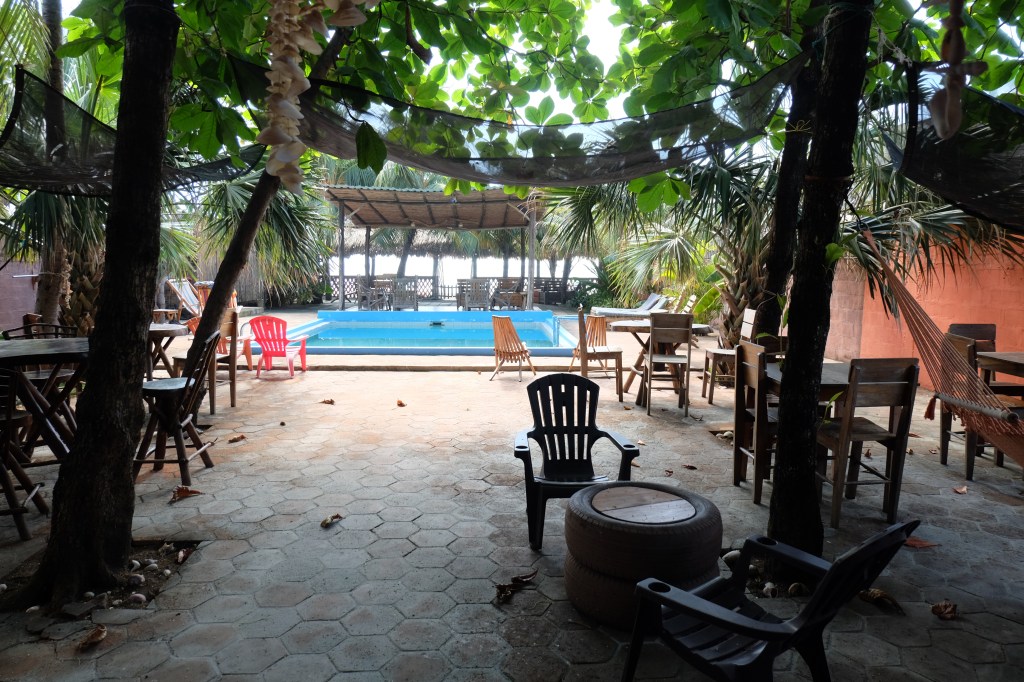
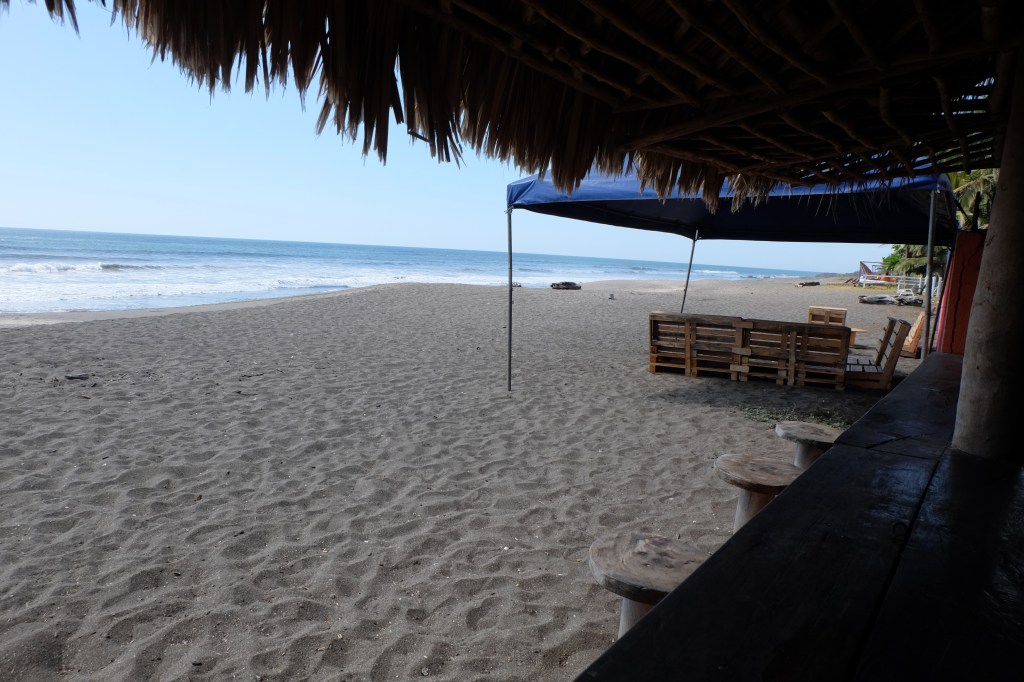
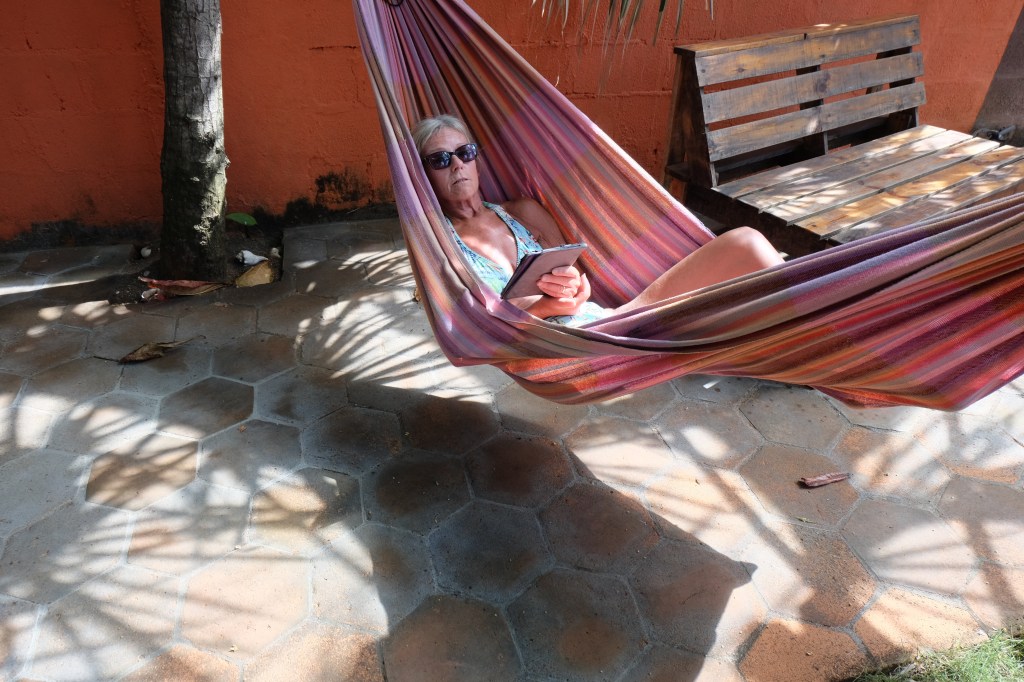
The beach was a real chill and although Las Penitas is a bit run down and scruffy, it does boast some half decent restaurants, including an Italian that served up some of the best ravioli.
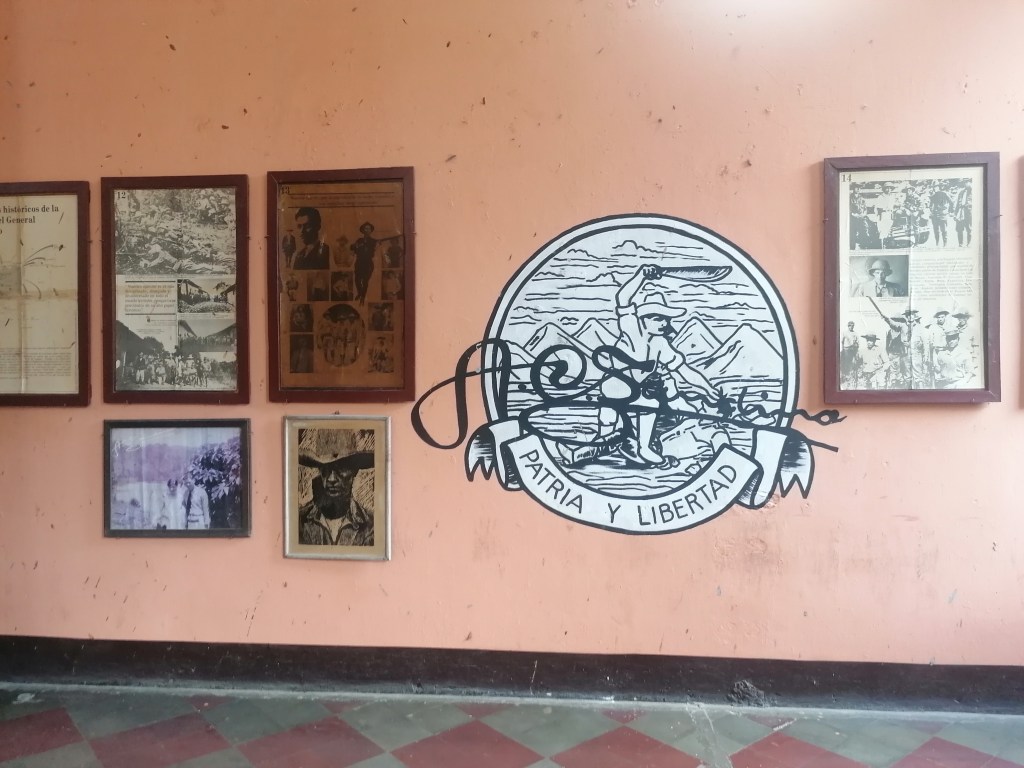
In Leon, over the New Year period, we enjoyed more sightseeing and took the free walking tour to get to know the city and its history and layout. We also went on the tour of the Museum of the Revolution. The museum consists of a couple of rooms in an almost derelict building showing photographs depicting the history of the Sandinistas and particularly the scenes in Leon during the fighting in the late 1970s and 1980s. All very interesting.
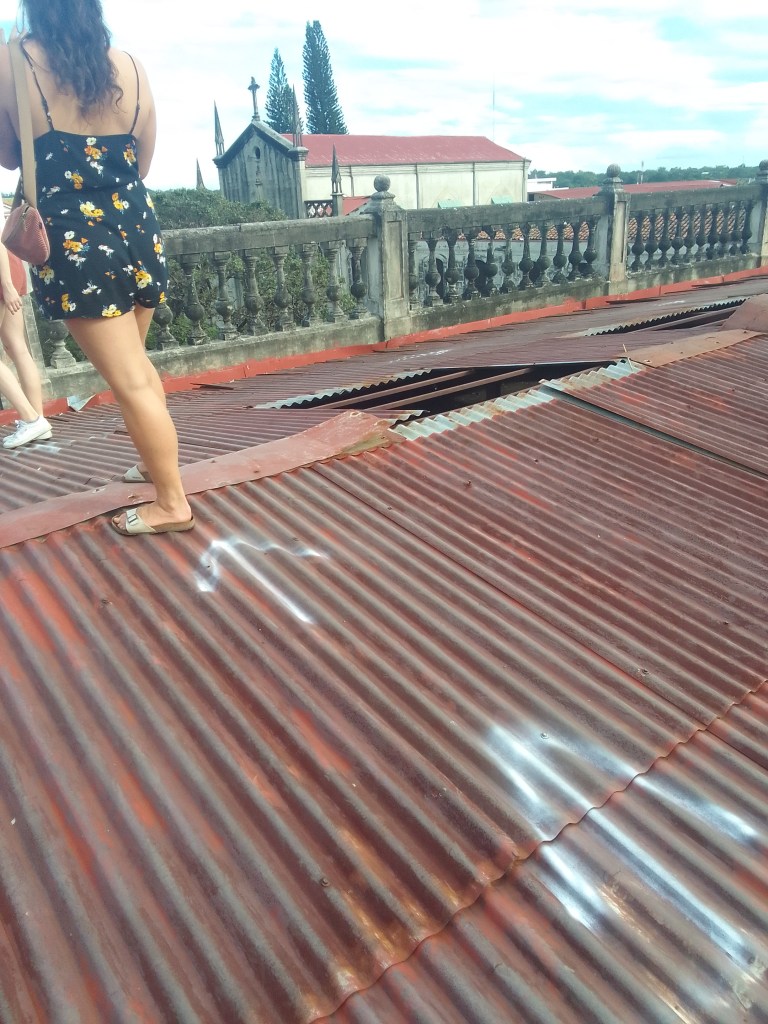
The tour became a great deal more interesting when our guide took us up on the roof to see the views of the city. It was a little disconcerting to be told only to walk where the arrows pointed and then to see NO painted at intervals!
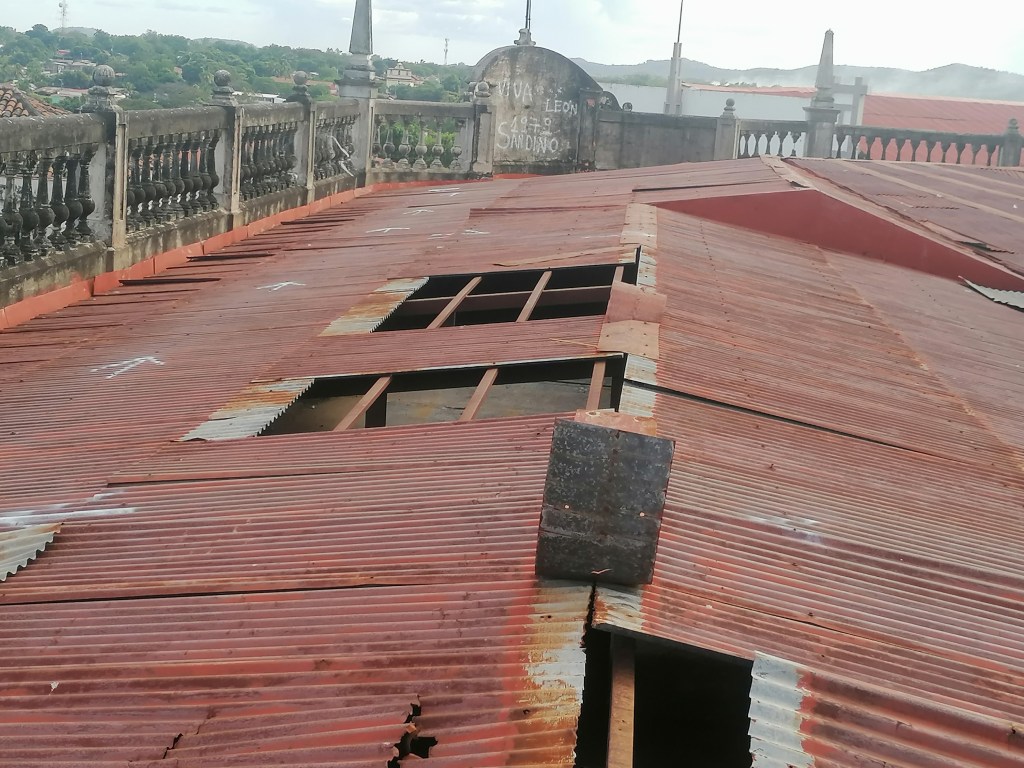
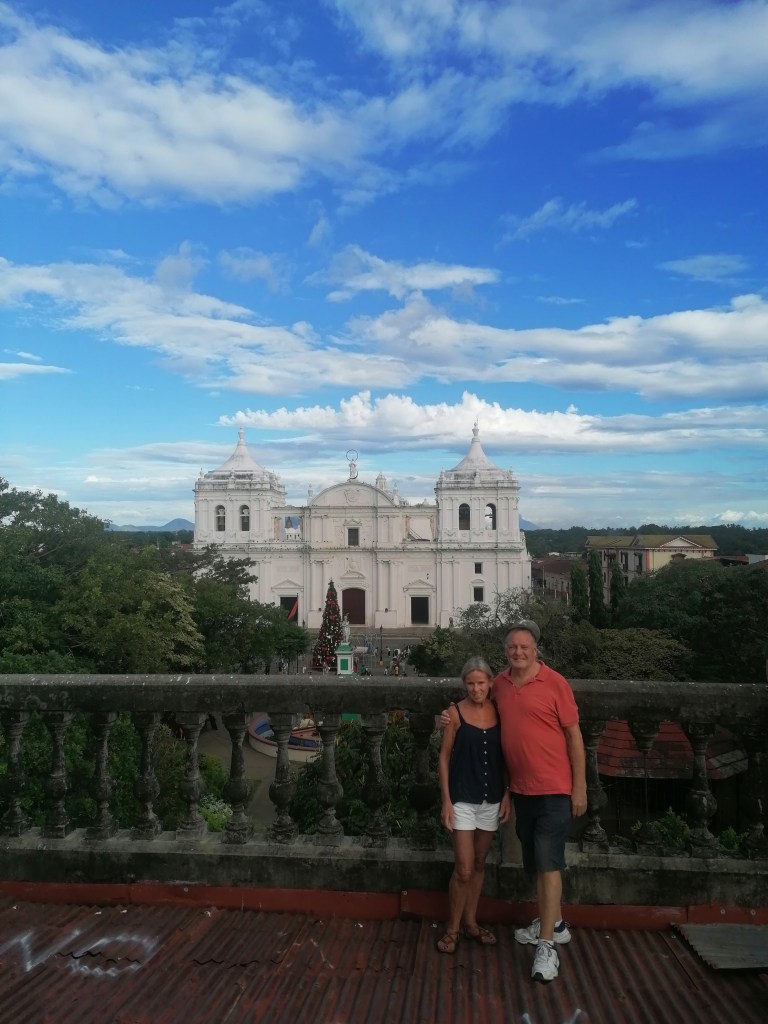
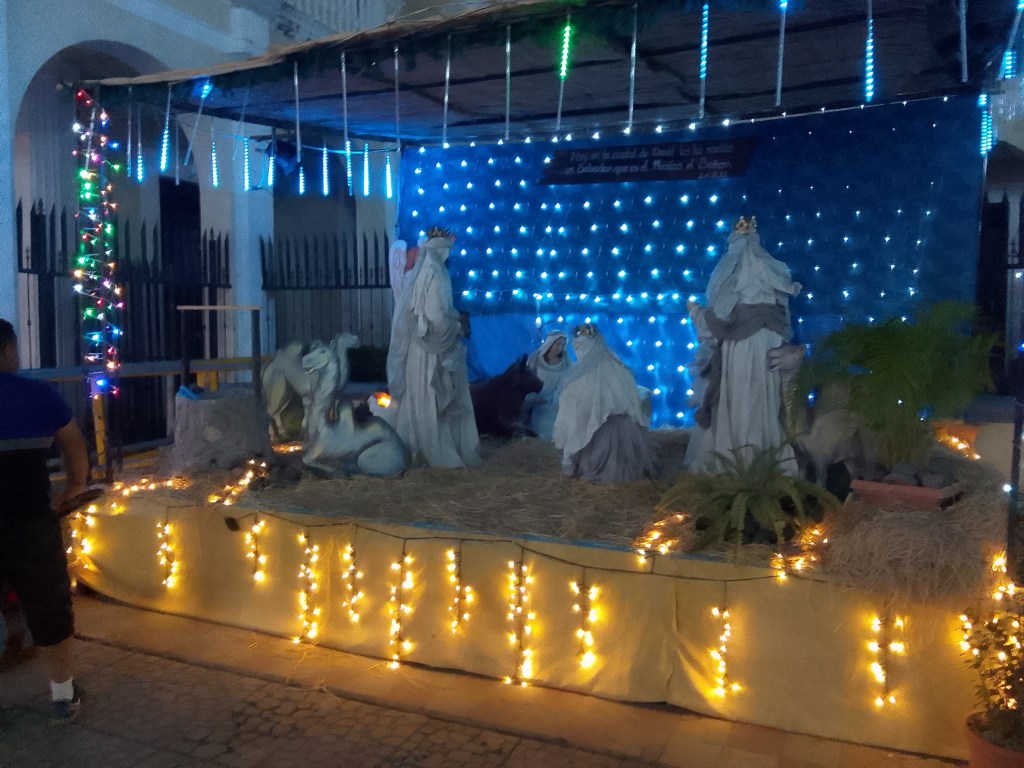
Whereas, I described Granada as shabby chic, I think Leon could only attain shabby status. Still worth visiting. Their central plaza Christmas efforts were hardly comparable to Granada!!
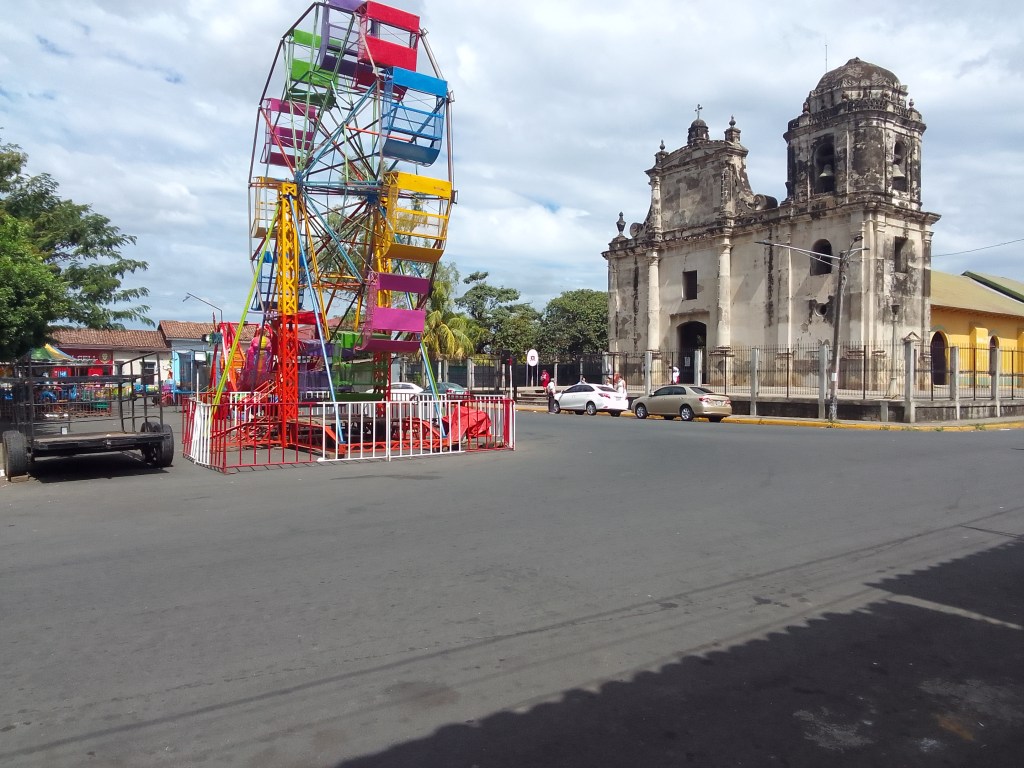
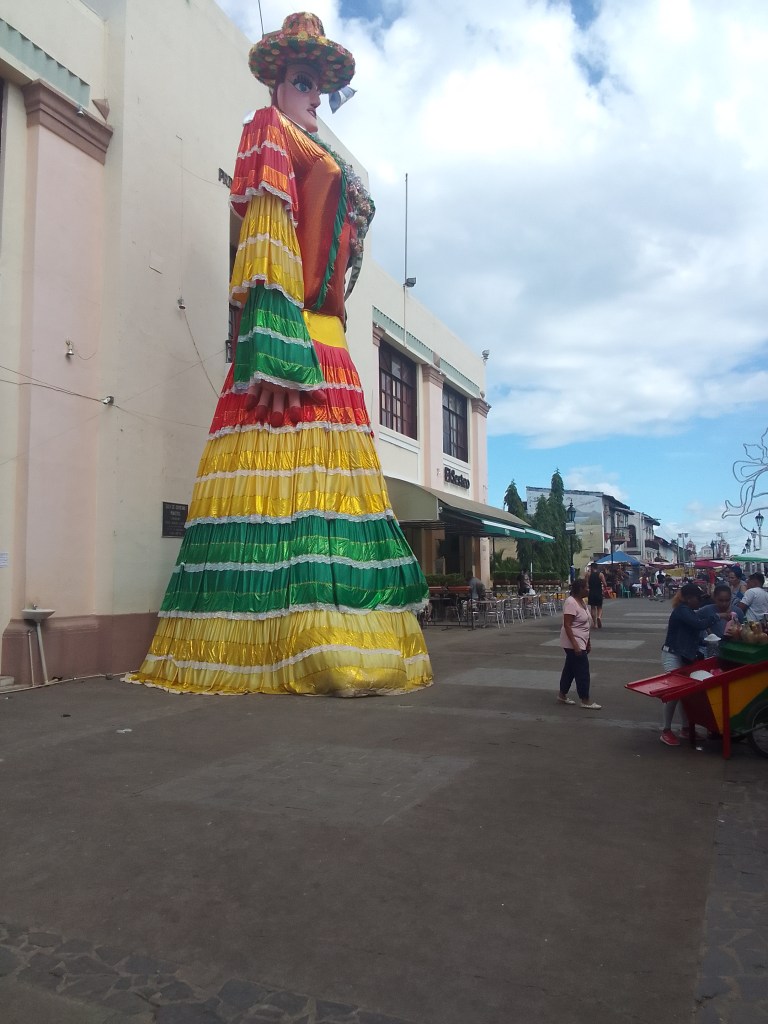
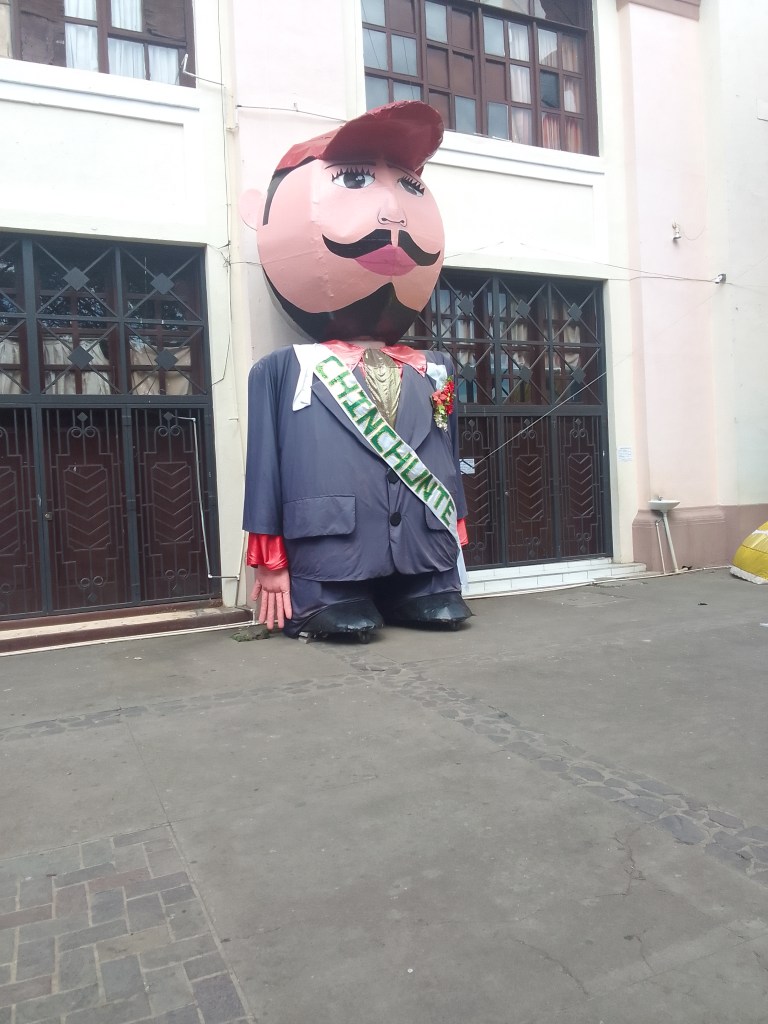
However, the Nativity Scene introduced a new element I hadn’t heard reference to before.
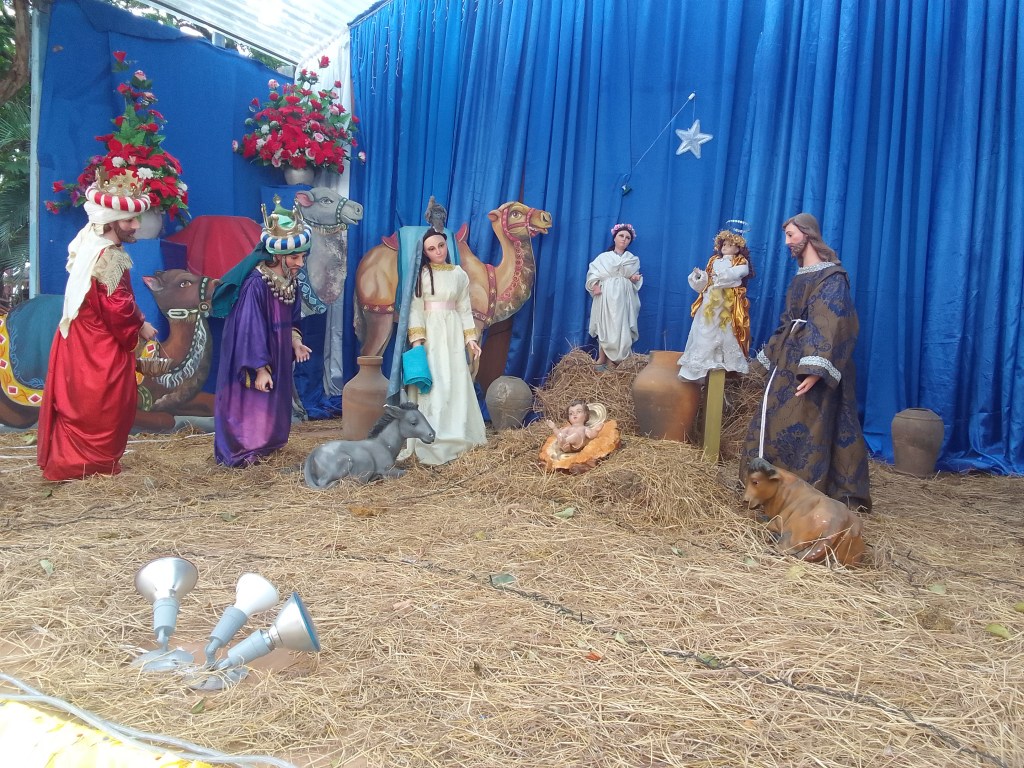
The Visitation of the Pigeon to The Virgin Mary. Very Pythonesque!
 De Giers on Tour 202 to 2025
Maps, I love them! I bought an original one of old Mumbai in Philips and Co (in Mumbai), possibly the same company? As I lived near the docks and Liverpool Airport I always wanted to see the countries they came from however I’m not in the same league as you two! Great blog as always. Lesley
LikeLiked by 1 person
Looks like you’re having both and interesting and at times relaxing holiday in a part of the world where transversing countries for you is like popping to the shops. Love it. Enjoy!
LikeLike
Great read as always cuz. Why dont you draw a map to show Lampard the way out of the relagation zone?
I thought Granada was in Salford Quays?
Stay well and safe journeys.
LikeLike