I was fortunate, or unfortunate, enough to go to University a year early, at the ripe old age of 17. It had its advantages and disadvantages. On the one hand I avoided having to get a job for a year, while, on the other hand, I couldn’t legally go into the Union Bar for a pint. I was billeted in a University owned property, in the leafy Avenues area of Hull, along with 5 other lads. It was a reasonable mix, with some in their first year, like me and others in their second or third year of Undergraduate studies and one guy doing a PhD. I shared a room with an American, who, some say, I drove into the priesthood. However, my closest housemate was a 34 year old Politics student from Antigua by way of Leicester, called George.
George sort of adopted me, being exactly twice my age, and was a wise head in the house.
The whole point of telling this story is not to reminisce on bygone friendship, but rather to mention Antigua, where George hailed from, which is in the Caribbean, and not the Antigua in Guatemala, where Pat and I now find ourselves.
While both places were named by the Spanish, their names do not have the same derivation. The Caribbean Island was named by Columbus in honour of “The Virgin of the Old Cathedral”, in Spanish “La Virgen de La Antigua”, in Seville. The old city, that we find ourselves in, was originally called Santiago, after the Spanish Patron Saint, but the site of the capital of Guatemala has moved several times and this is now called Antigua Guatemala, meaning Old Guatemala, distinguishing it from the current capital and its predecessor, Cuidad Vieja, or Old City. Clear?
Antigua, Guatemala is a World Heritage Site and, although most of the city was destroyed by a series of earthquakes in the 18th century and only the Church of The Merced survives, many of the current buildings largely dating from the 19th century, they do look and feel the part of an ancient Spanish Colonial city.
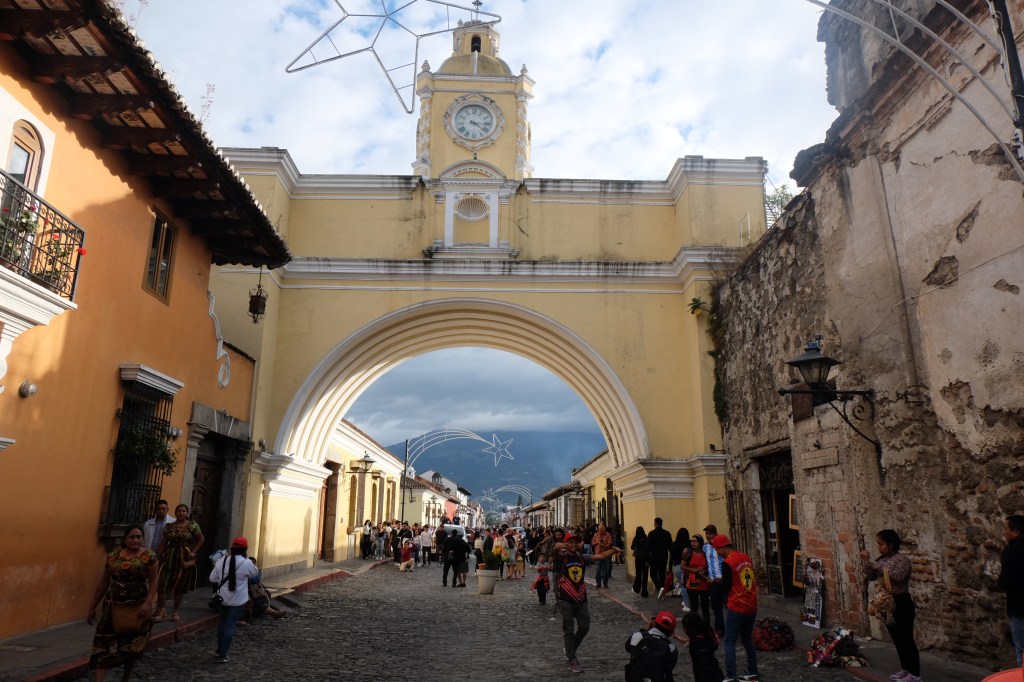
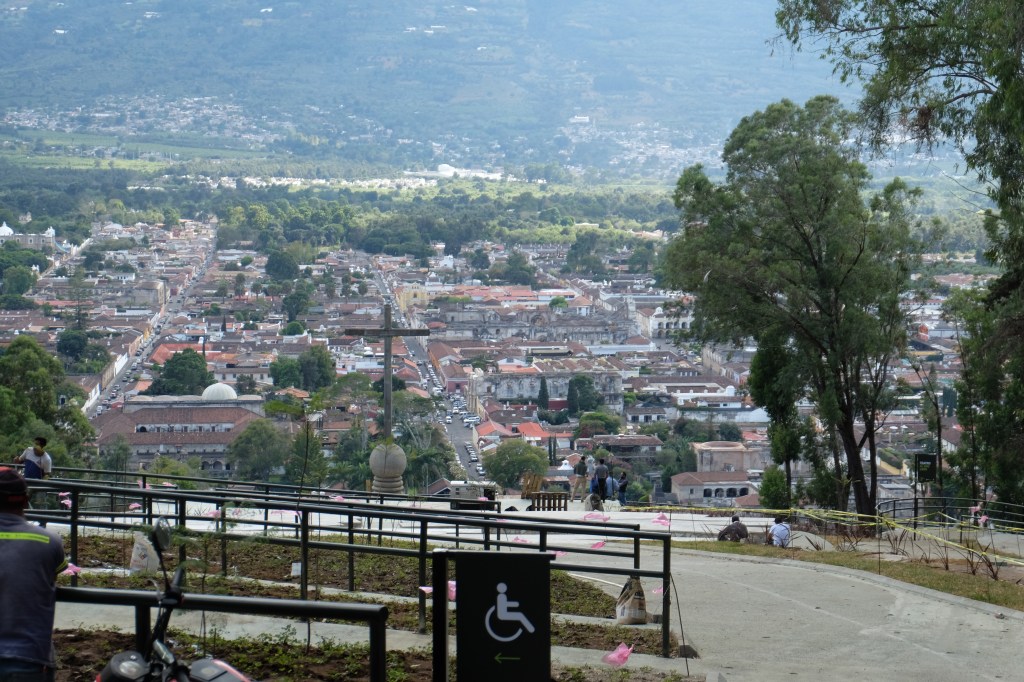
The town is built on a strict square basis with Calles numbered one way and Avenida the other. Impossible to get lost, you would think, but not all corners are numbered and often a numbered road is given a name for part of its length just to add to the confusion.
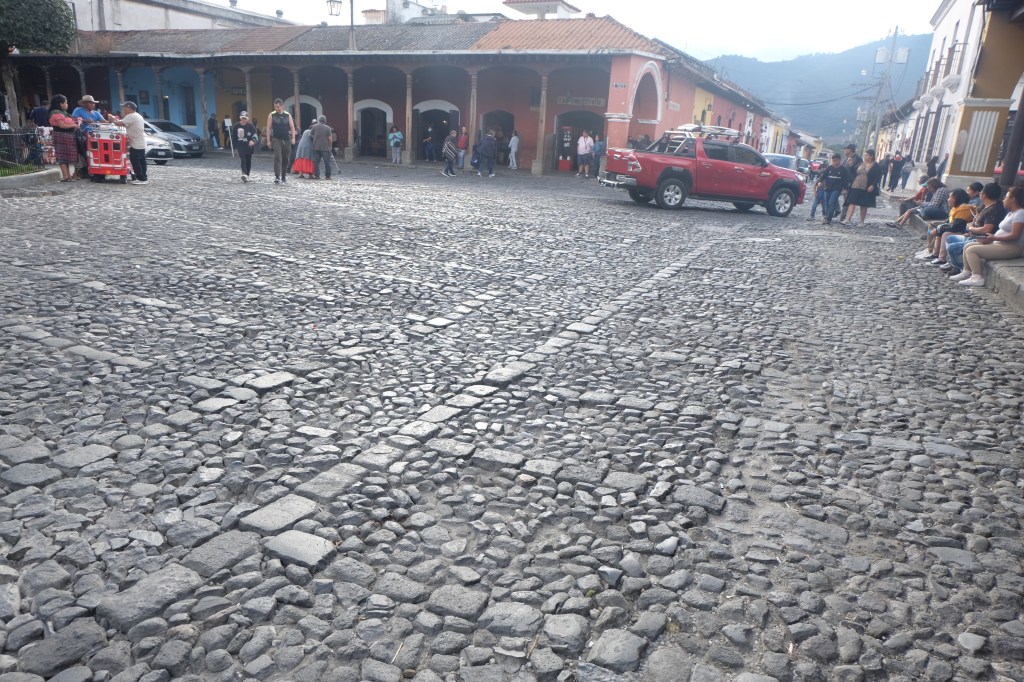
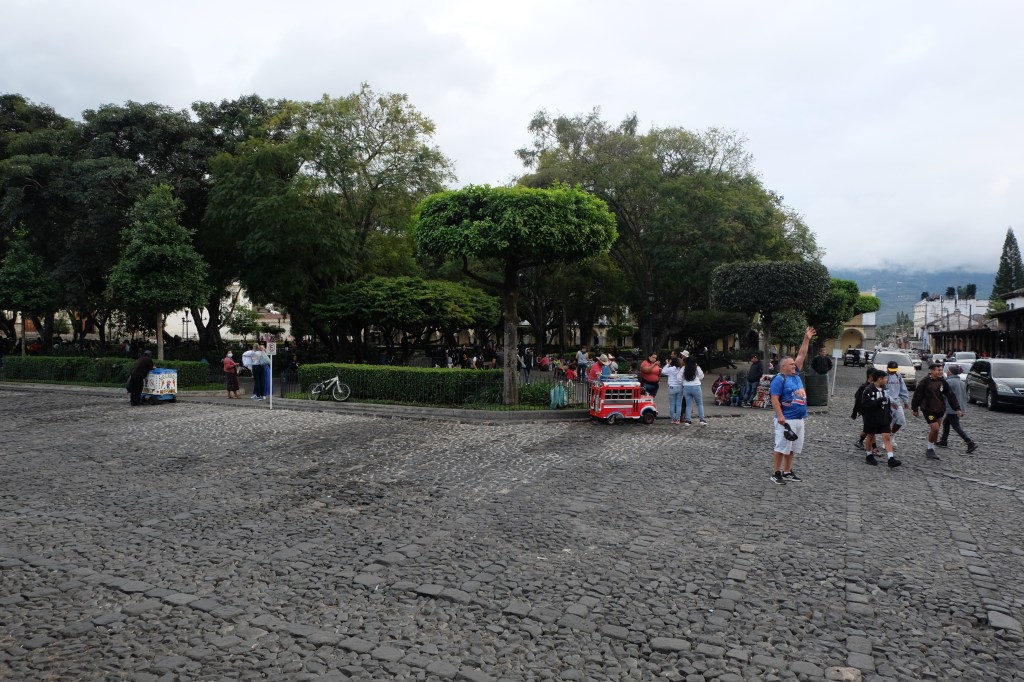
All the streets in the old town are cobbled and not all to a great standard. It was bad enough travelling by Uber but I resisted Pat’s tempting offer to hire bicycles. I felt as though all me teeth were being shaken out.
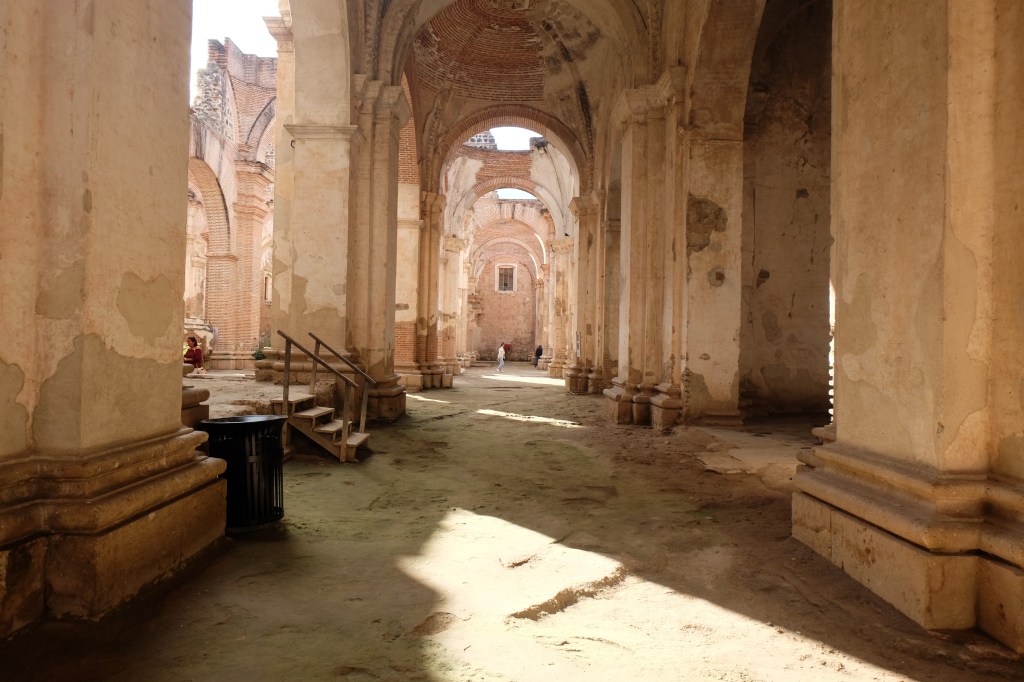
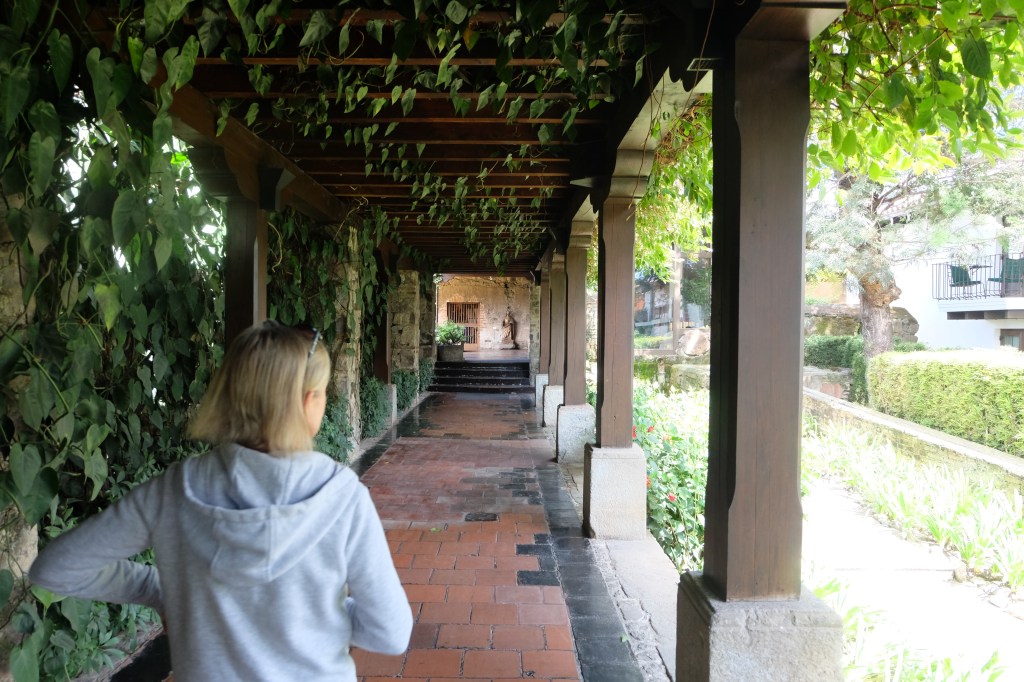
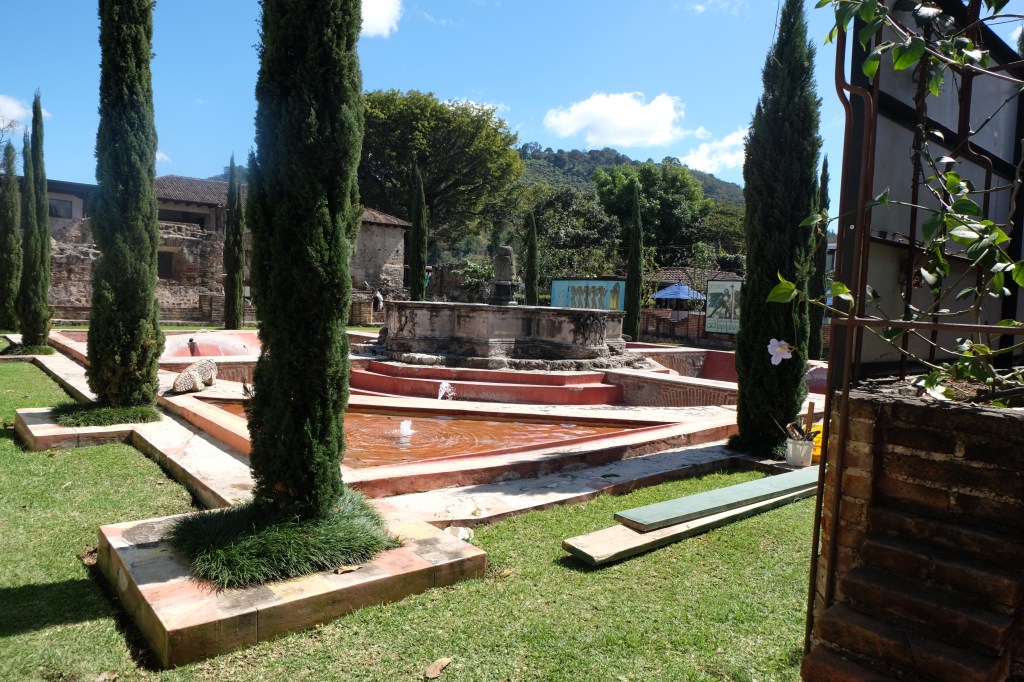
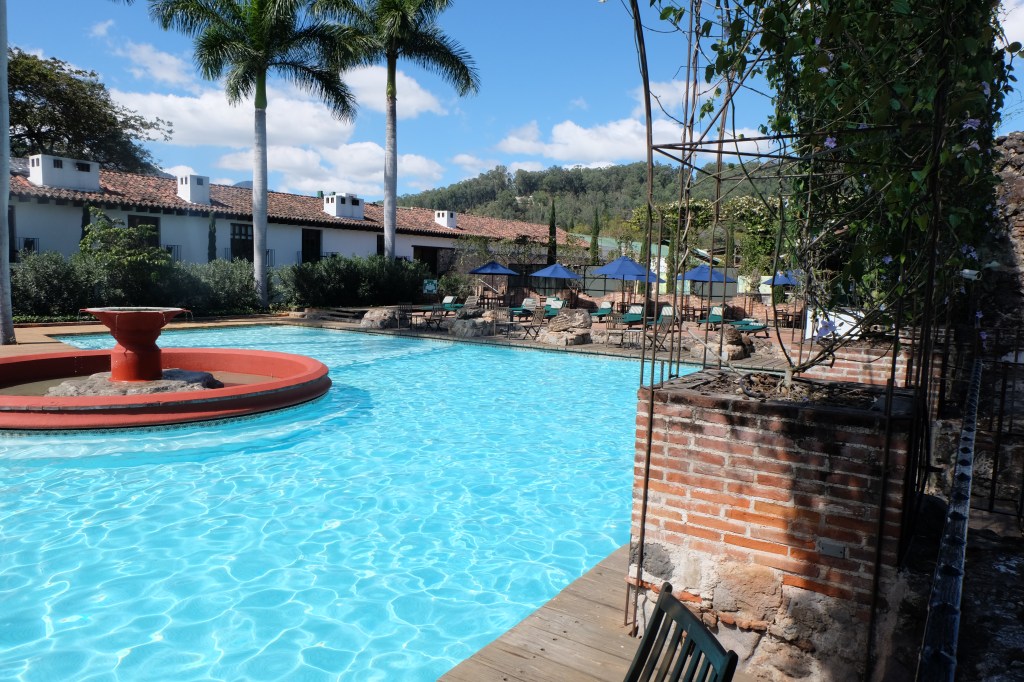
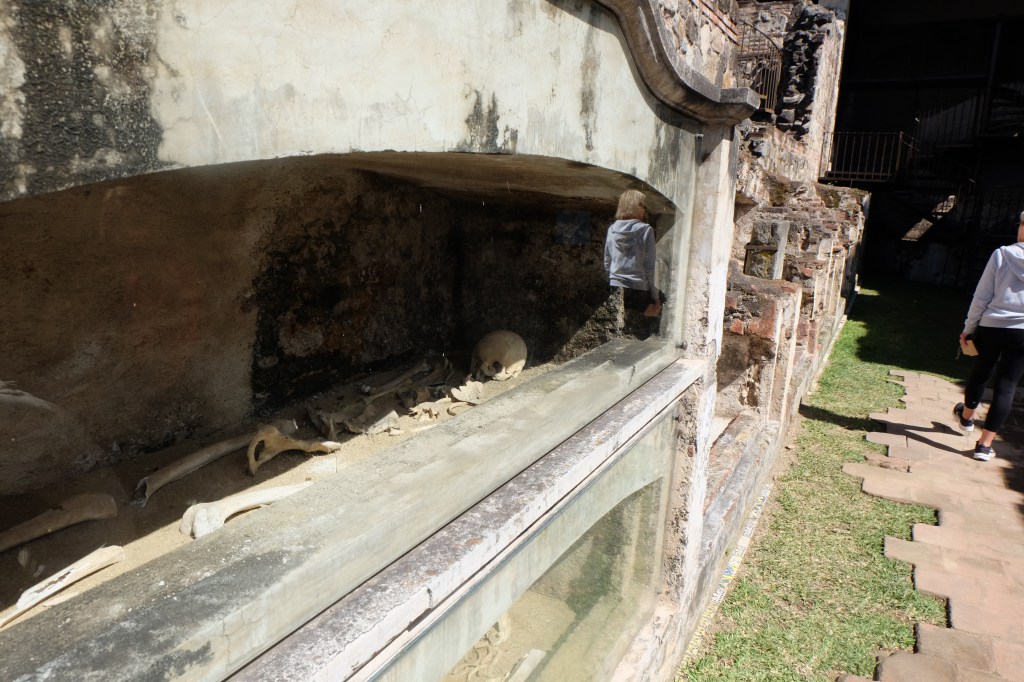
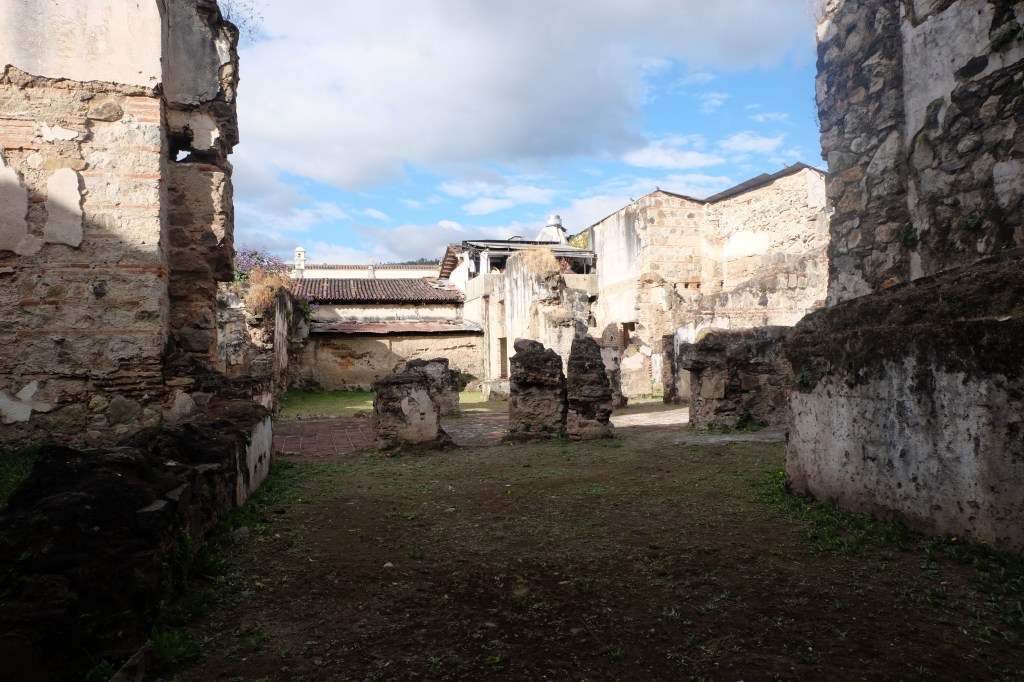
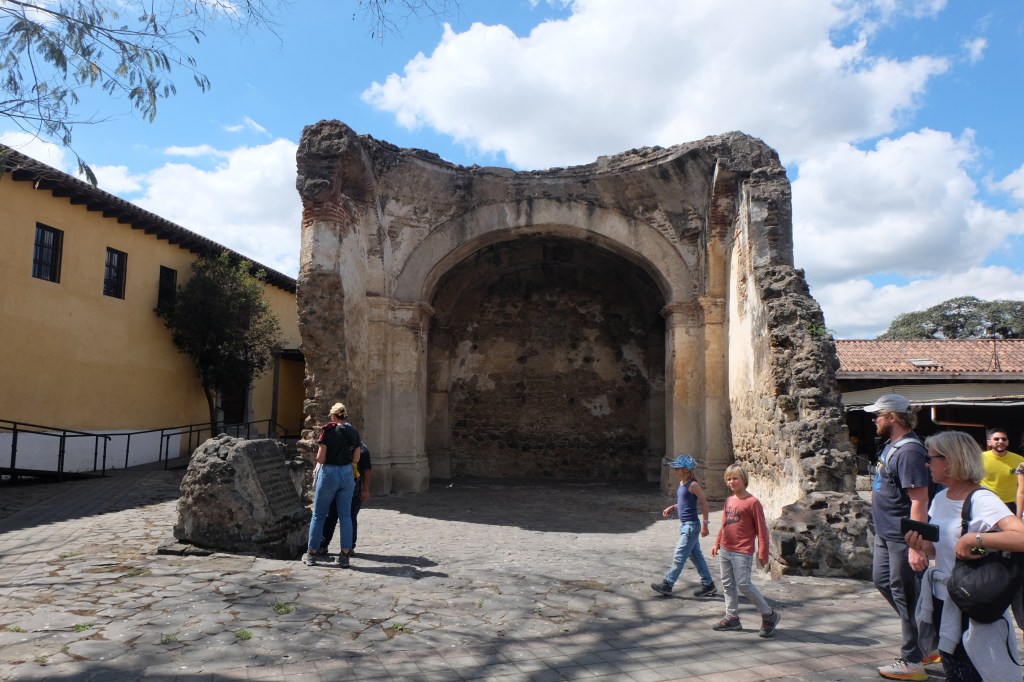
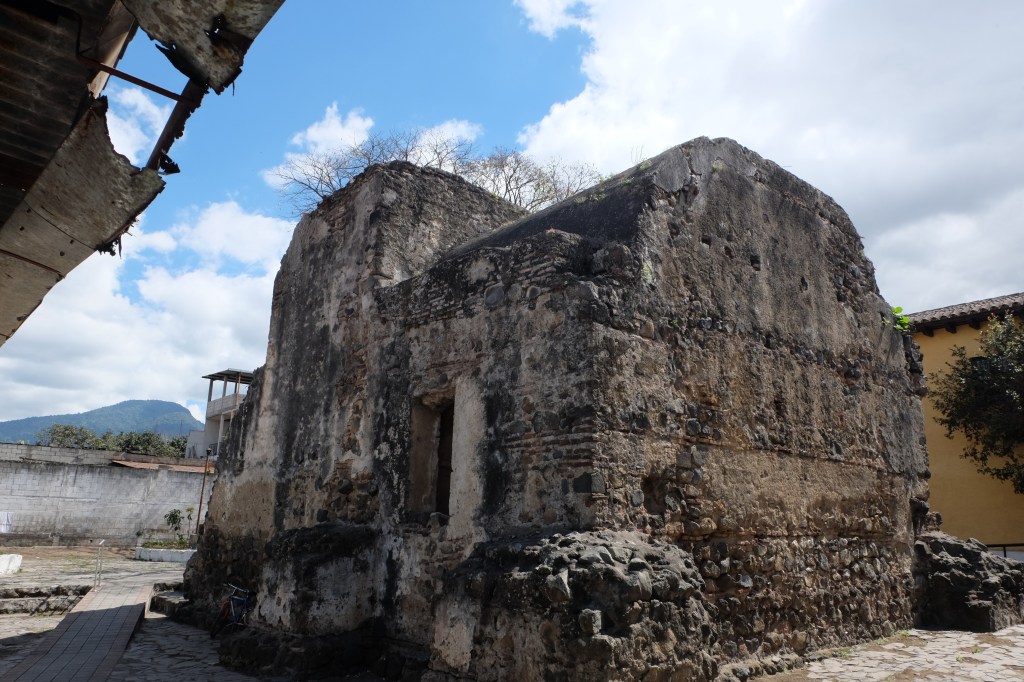
As I mentioned, most of the city was destroyed by a series of earthquakes in the 18th century. Some of the ruined buildings can be visited. Their sites, in some cases have been rebuilt upon, while in others just the shells remain. Close by where we were staying was the Hotel Santo Domingo. This stands on the site of the old Convent, which in the 17th century was one of the largest in the Americas. As you may guess it was destroyed in the 1773 earthquake. Over the past 30 years, Project Casa Santo Domingo has aimed to rescue the Convent and Temple from the rubble that had lain there for 2 centuries. The Hotel & Spa is built in the grounds alongside a museum and the partially reconstructed old convent. It is tastefully done and a truly wonderful place to visit.
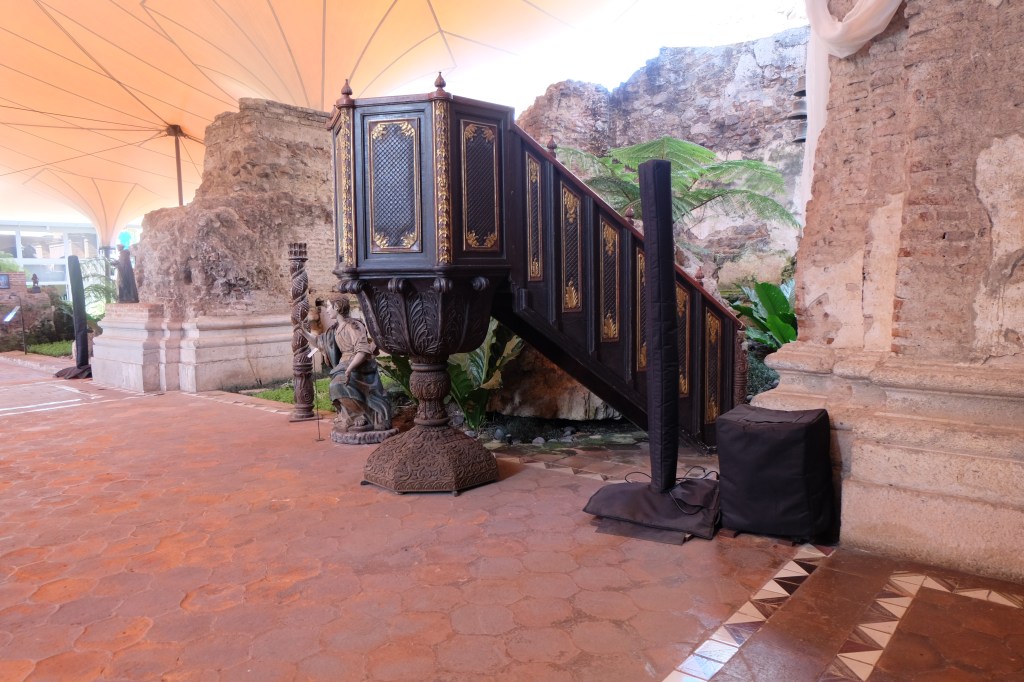
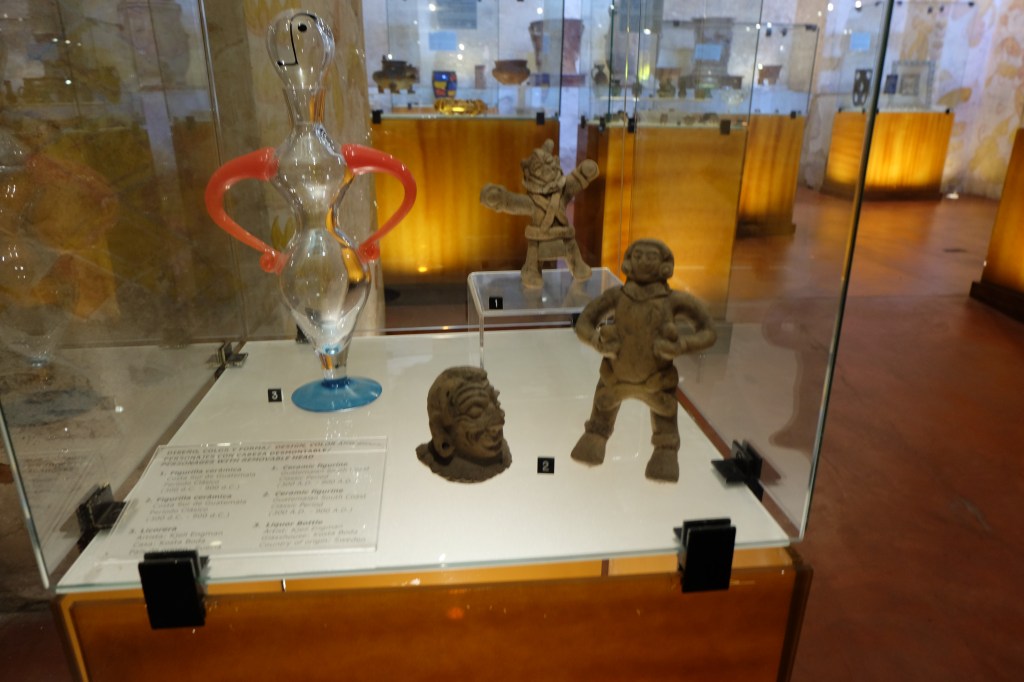
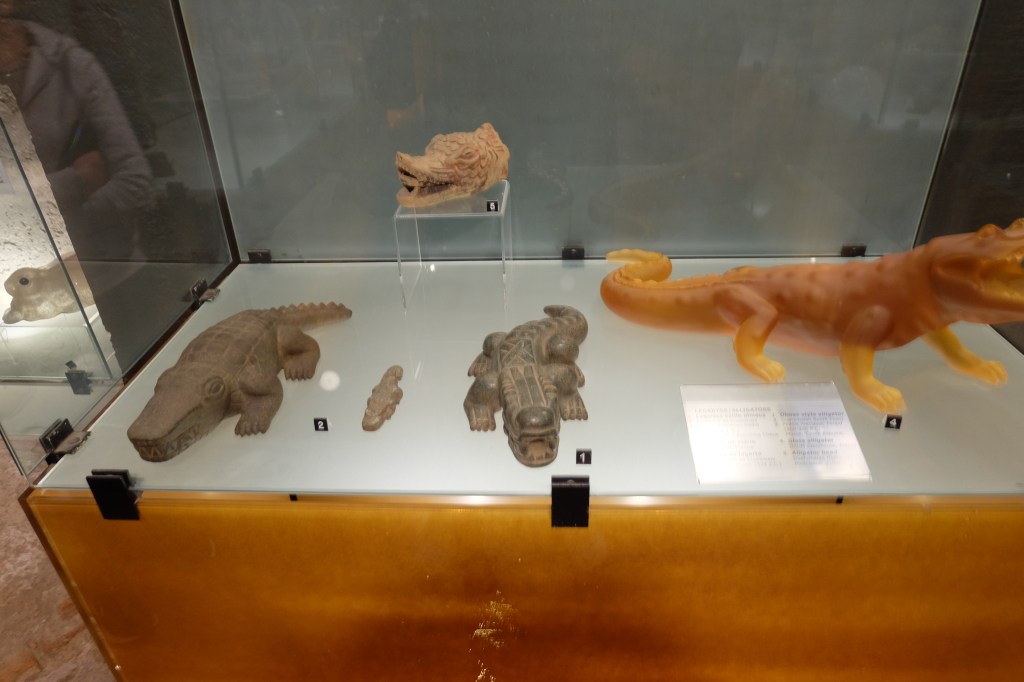
In the museum they had a fascinating exhibition which mixed pre-Columbian artefacts with modern glassware.
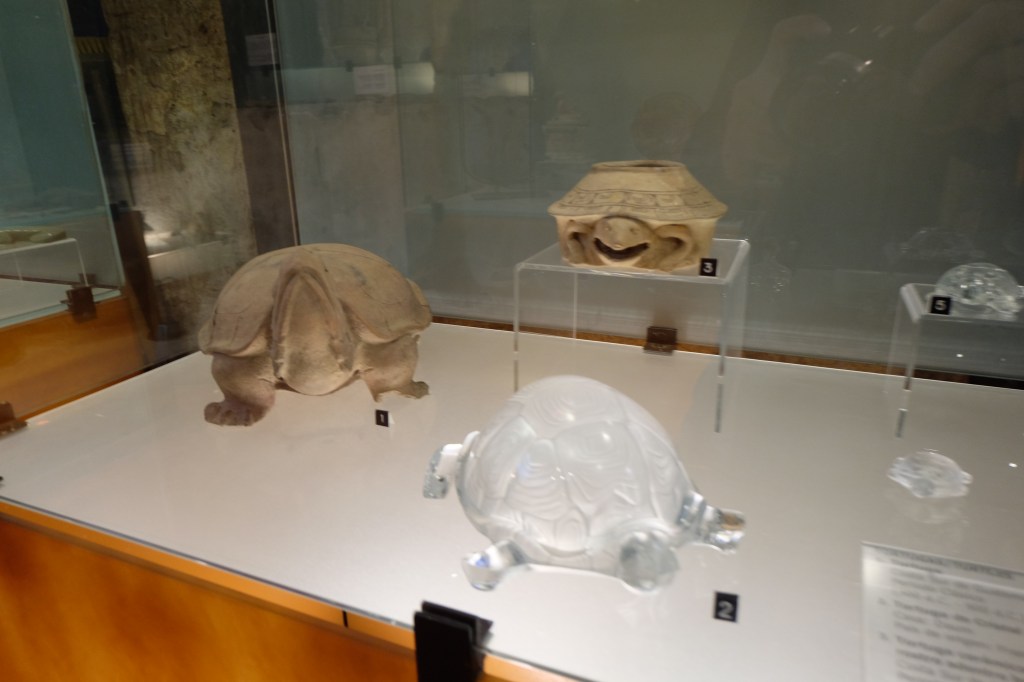
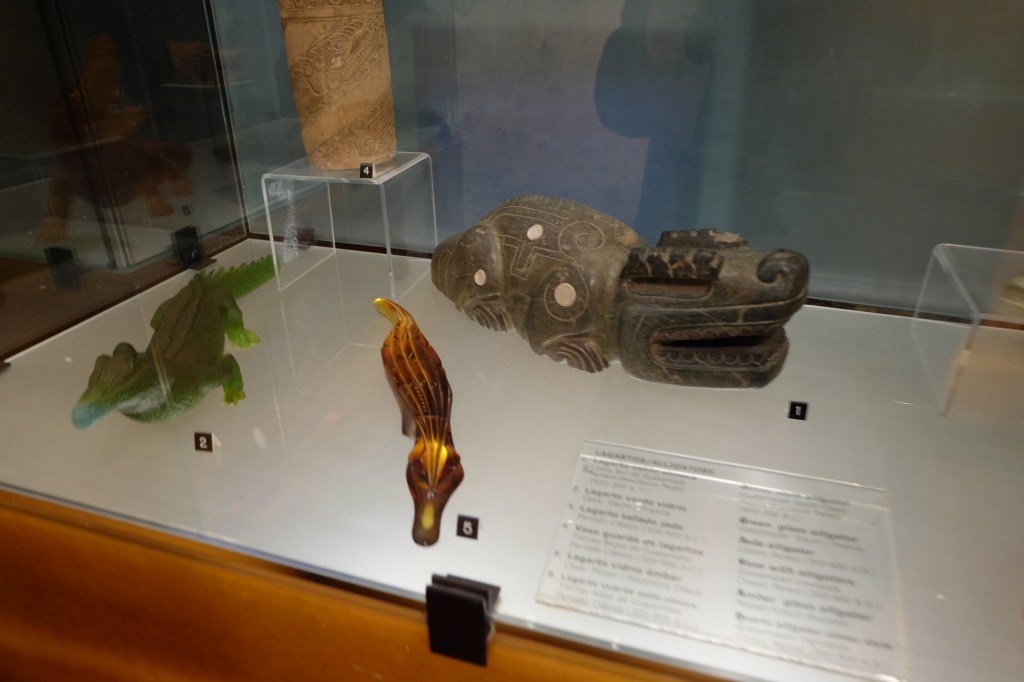
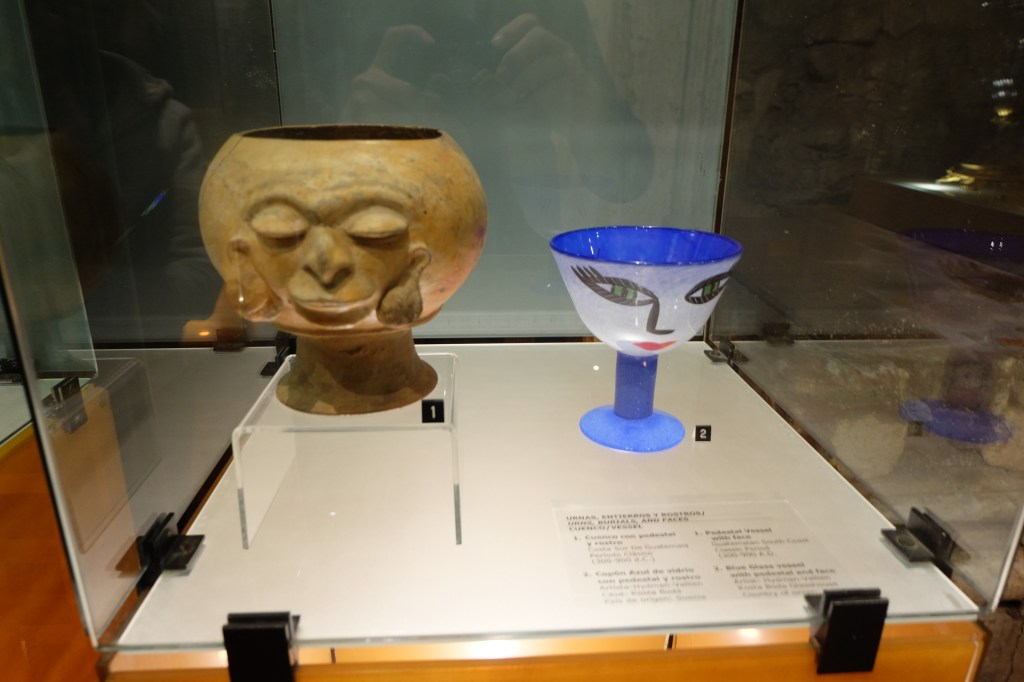
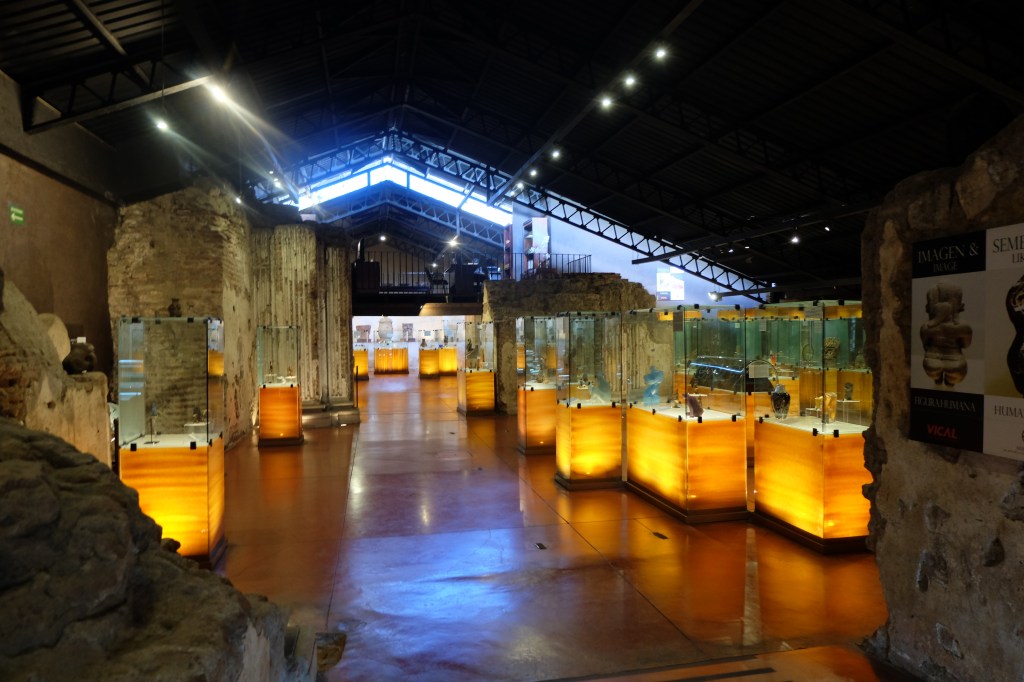
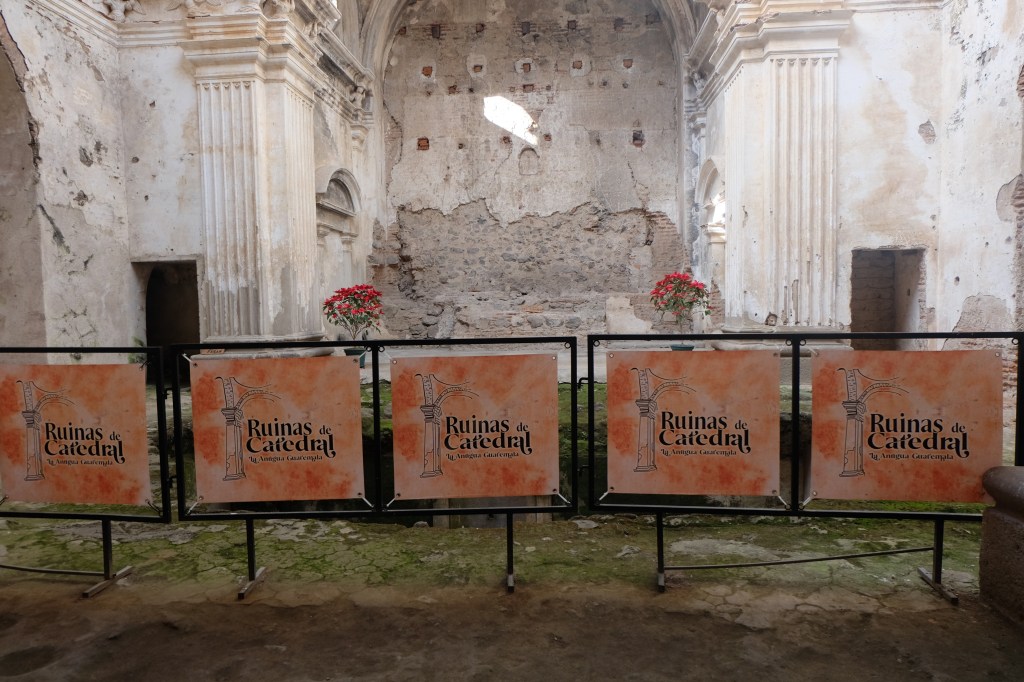
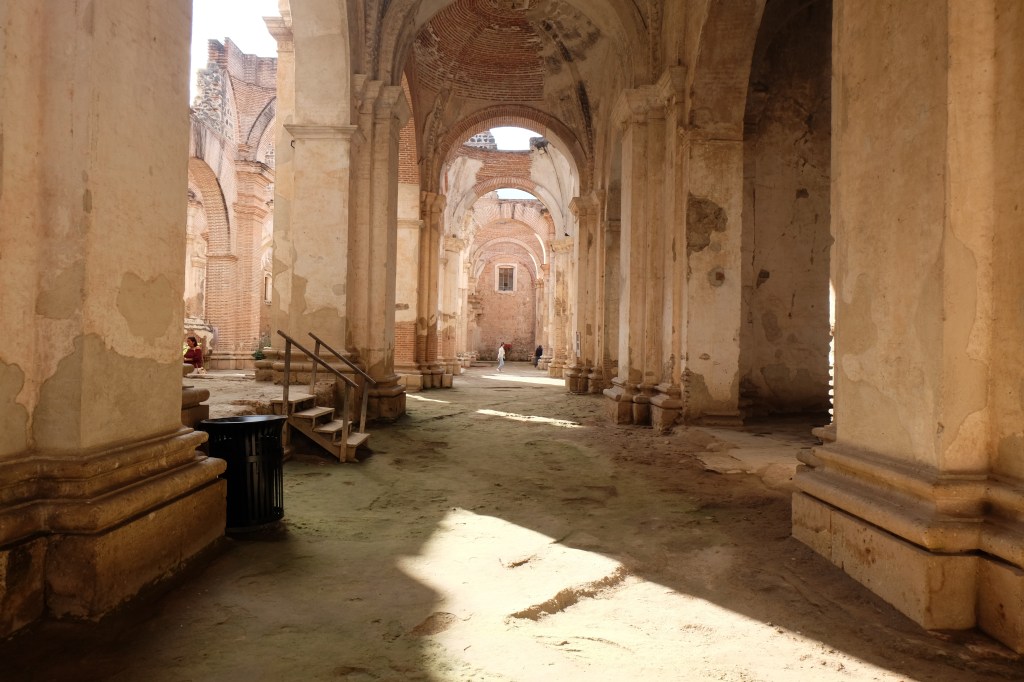
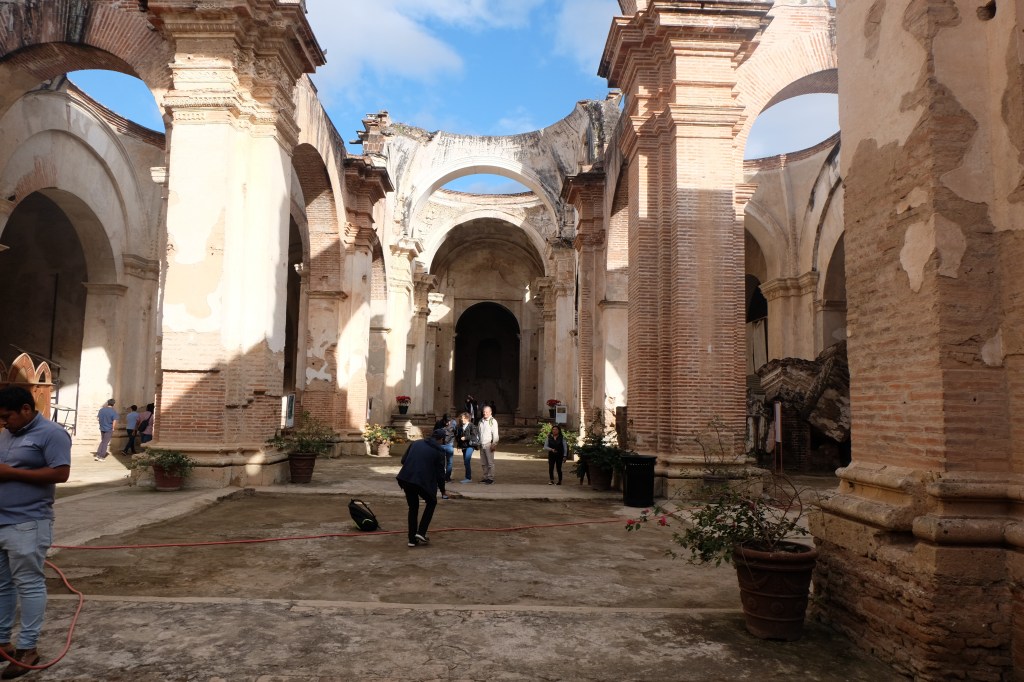
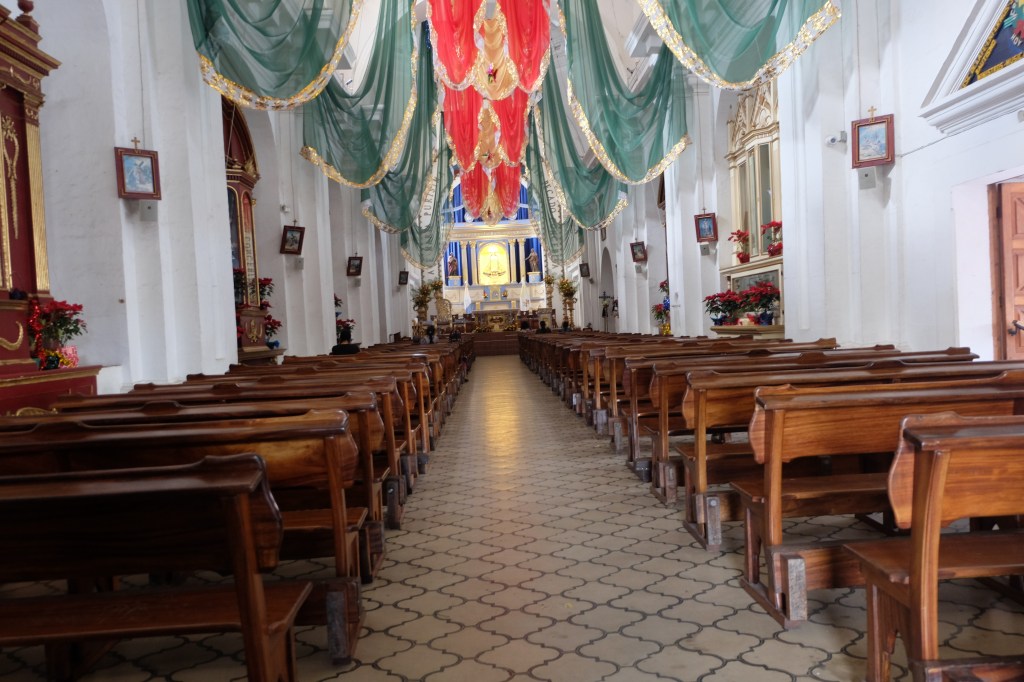
The Cathedral, along one side of the central plaza, as in all Spanish colonial cities, was not dedicated to Saint James (Santiago), although the original city was named for him. It was also surprisingly small and not facing on to the plaza. It turned out that this was effectively just an adjunct to the main Cathedral which stood behind…in ruins…you guessed it…destroyed in an earthquake.
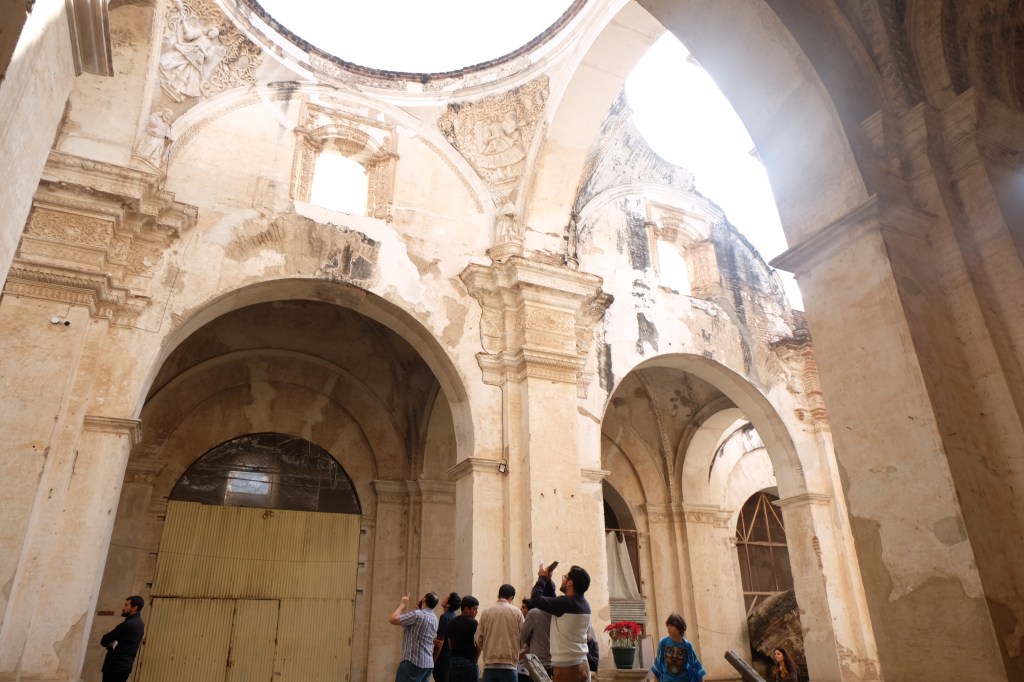
The earthquakes result from this part of the world being on the ‘Ring of Fire’. Faults and chains of volcanoes run right through Central America. Given Pat’s difficulties in climbing, added to the thin air at elevation, I am the designated family vulcanist. Nearby is Pacaya, overlooking Guatemala City, and I was duly booked to trek to its rim, while Pat booked a visit to a Hobbit village. No joke!
Hobbitenango is an eco village which developed Hobbit style houses built into the sides of the valley in which it sits. Not only an hotel it is a local attraction and has visitors from all over the world, including Knaresborough. That’s one for the Visitor Book.
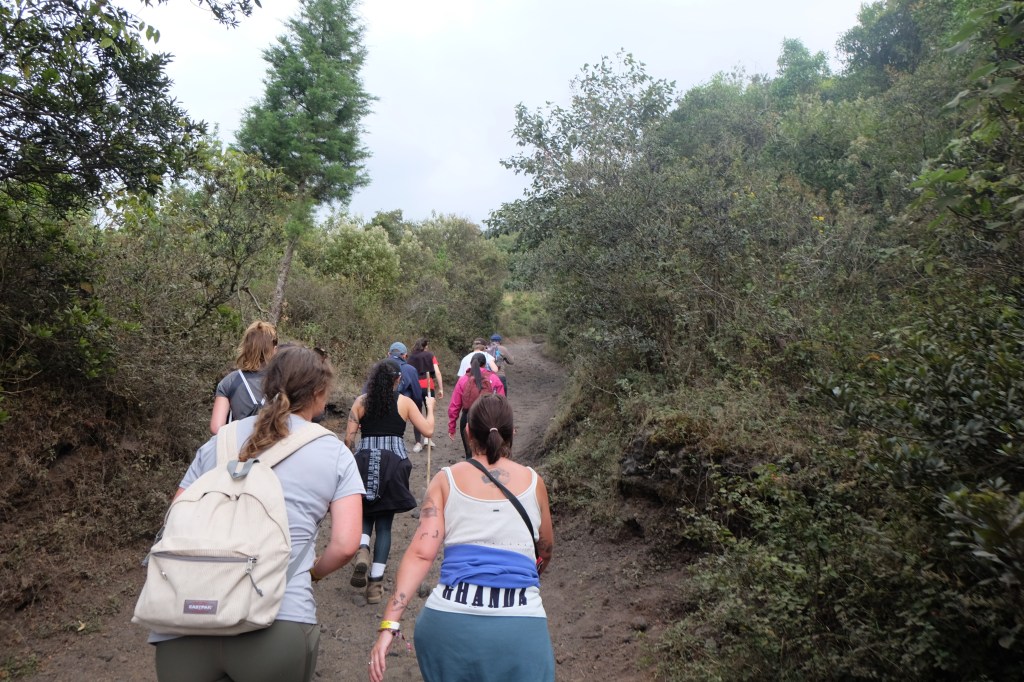
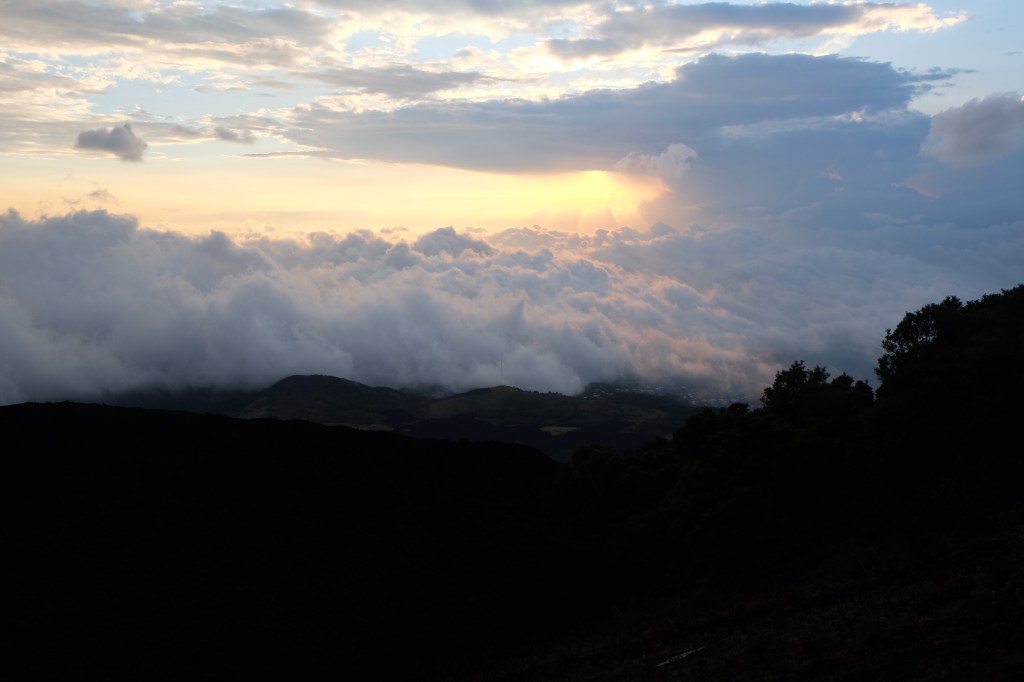
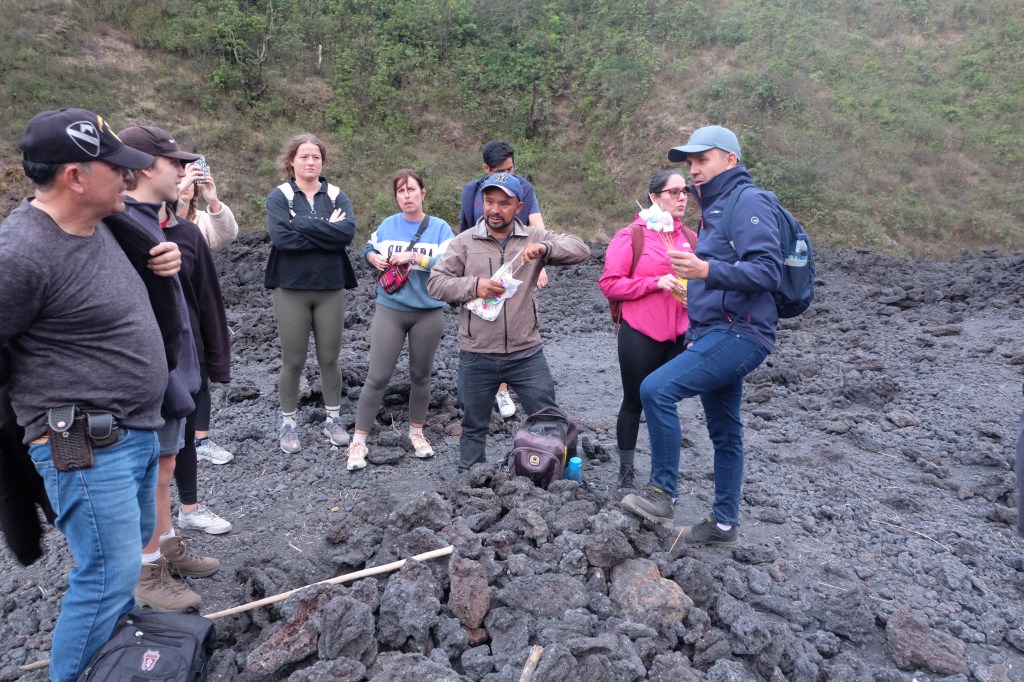
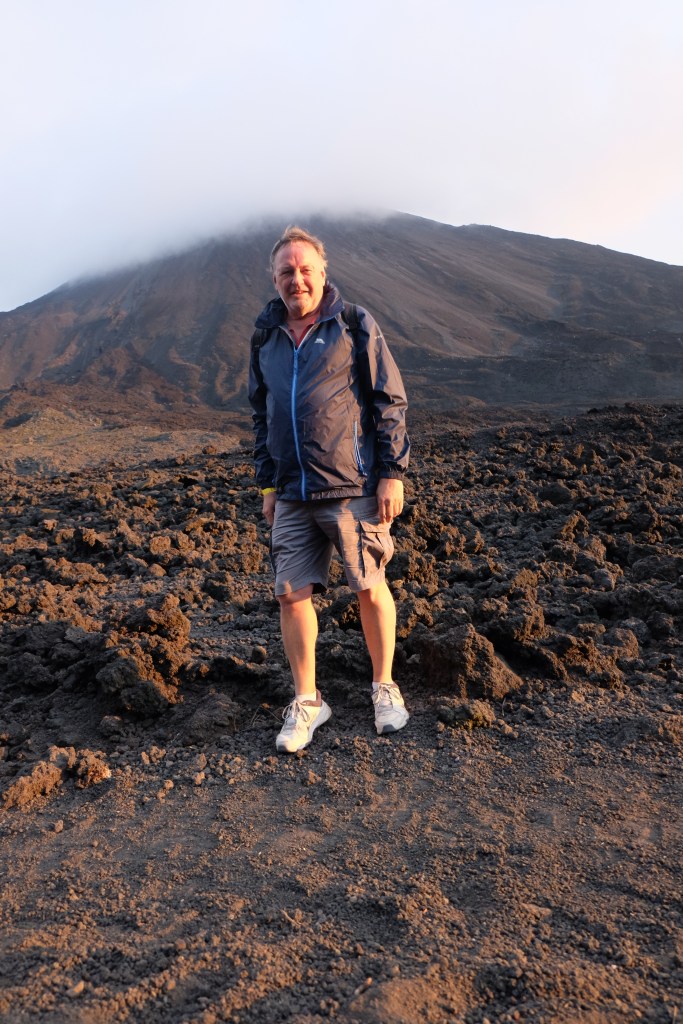
Meanwhile, I was hauling my weary body up a dusty lava strewn trail, above the clouds in the valley to eat marshmallows roasted by our guide in a hole in the earth’s crust. I don’t even like marshmallows, so this was scant reward for my Herculean efforts. At the commencement of the walk, several of the group, who were considerably not in their sixties, set of at a pace, leaving myself, an elderly German and his wife, who was on horseback to take up the rear. I might add that the Germans were well behind me. I cannot tell you of the satisfaction of beating a horse.
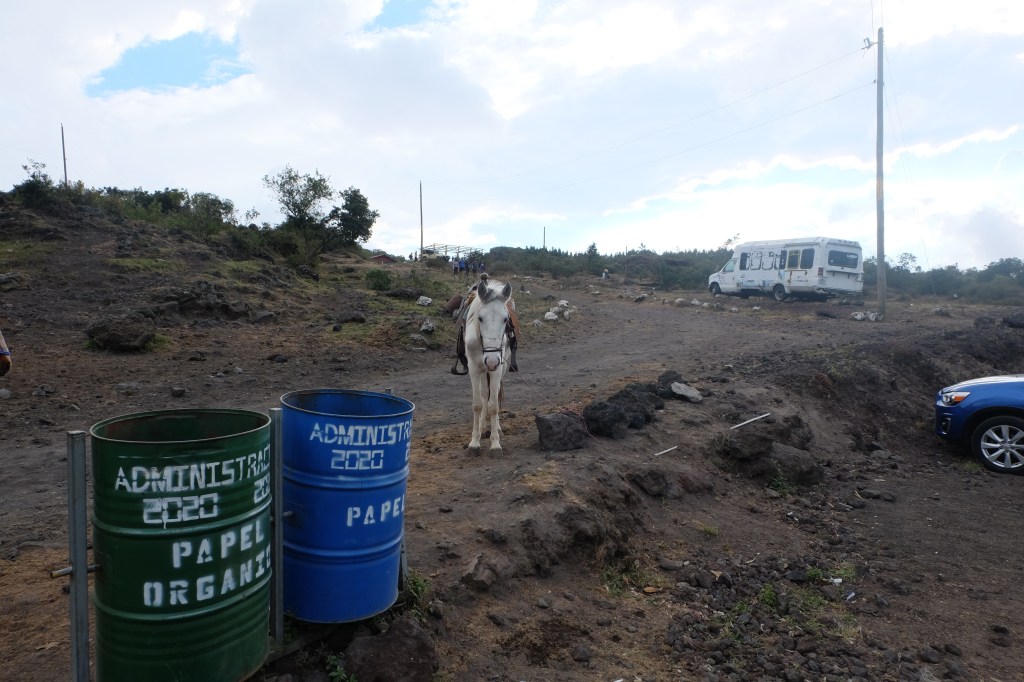
Sweat was soaking my t-shirt and, as we reached each rest point on our vertical challenge, I could hear the comments on my “out of condition” condition. These could not be disguised by use of German, French, Spanish, or indeed Australian. I endeavoured to show them some Northern Grit. I am built for comfort rather than speed, but I am a stayer. Indeed, I powered (artistic license) onwards and upwards, leaving several youngsters and horses in my wake. Only the guide could keep pace and we enjoyed a very satisfying two minutes at the top waiting for the others. Now for those hard earned marshmallows.
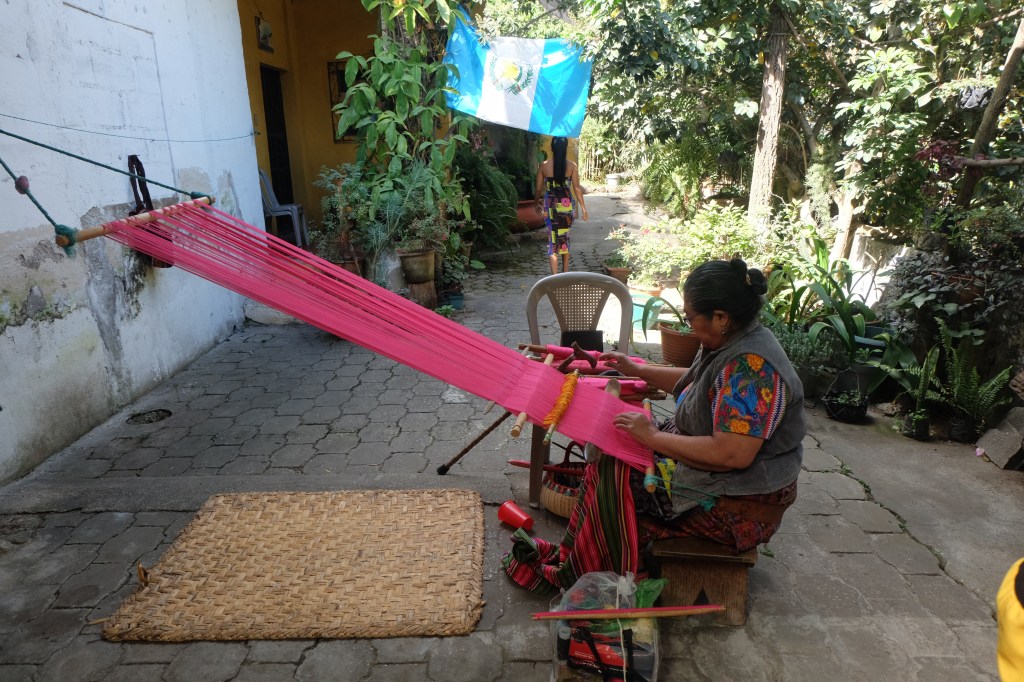
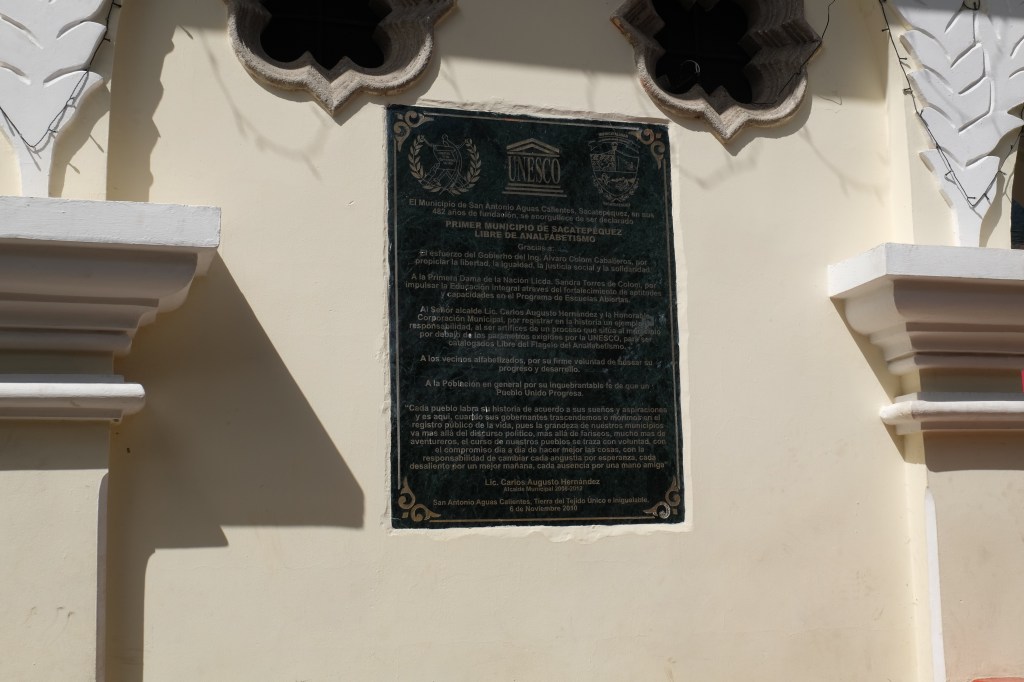
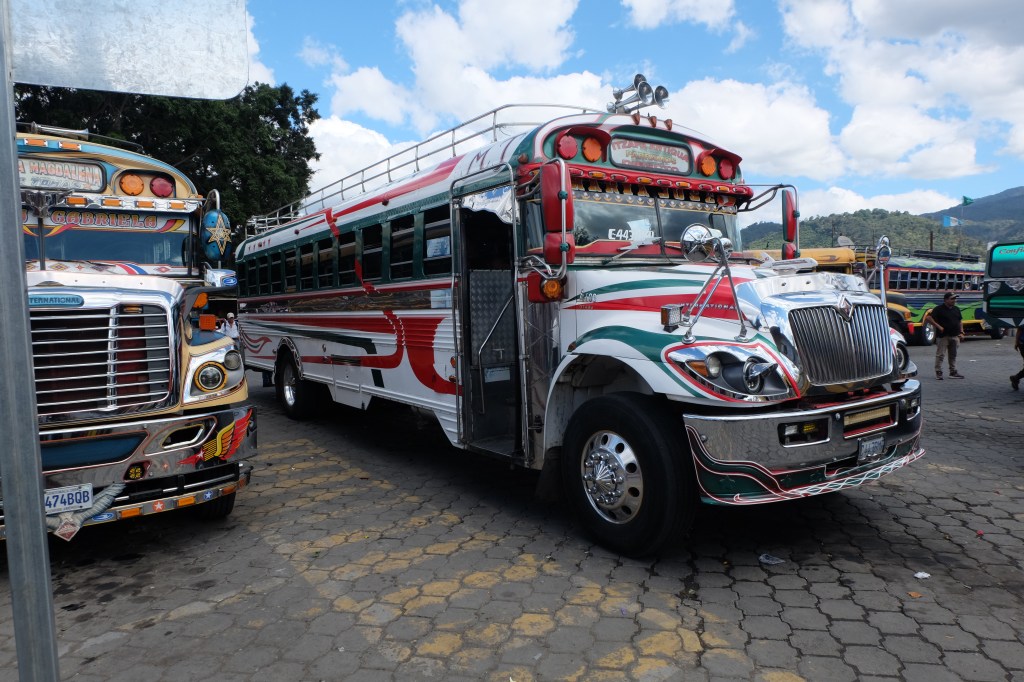
As a less strenuous activity we decide to go on a walking tour of the nearby villages. When I say, less strenuous, I am comparing Hobbitenango. It involved not much of Antigua but a few rides on the local chicken buses to the old city, literally, Cuidad Viejo and San Antonio Aguas Calientes, to see traditional Huipil making (decorative tops worn by the women). This town was the first in the country to attain 100% literacy!
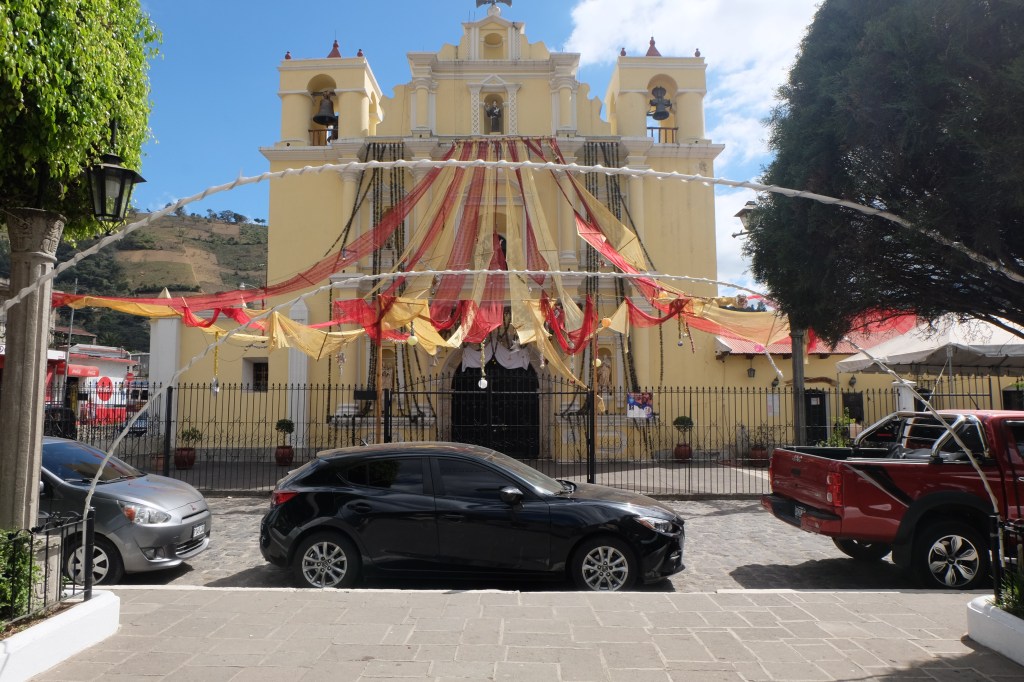
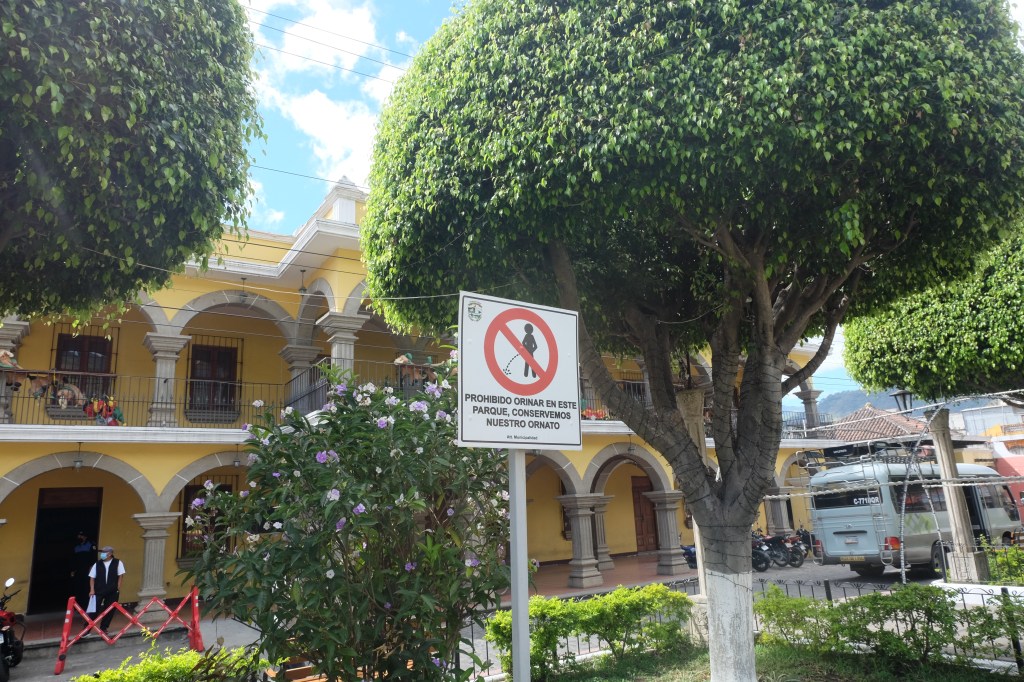
The Old City was devoid of litter. Very noticeable when you have been in Central America for any time.
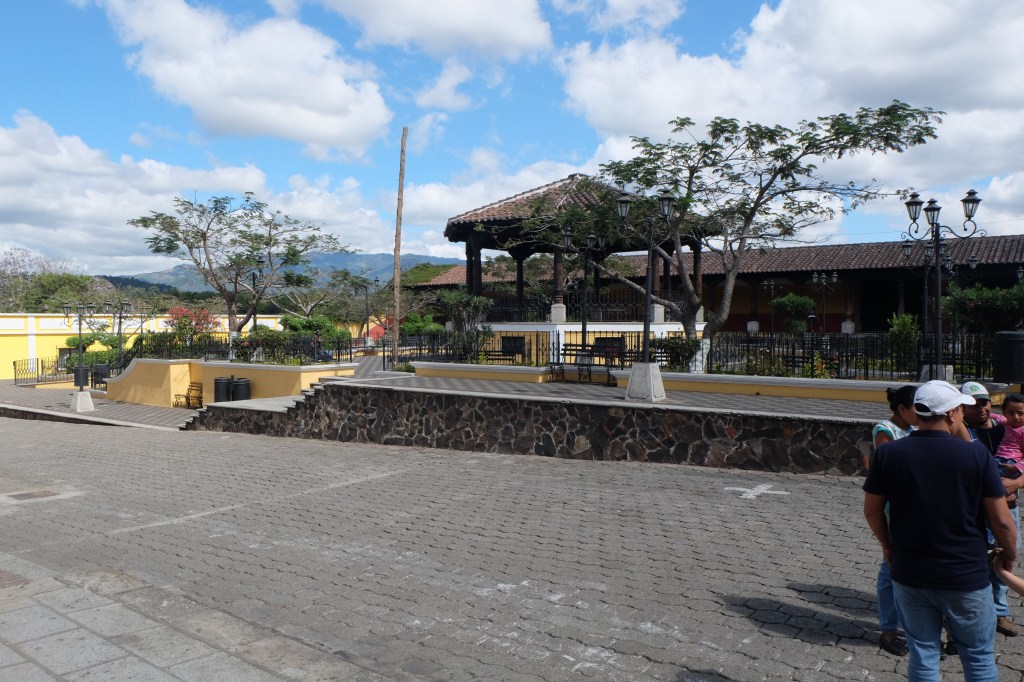
I told the driver to wait.
Before arriving in Antigua, after our tortuous journey of almost 24 hours, I did say I hoped it would be worth it.
It was worth every minute. We loved Antigua, Guatemala.
 De Giers on Tour 202 to 2025
Hi folks, Well I’ve just reread your blog on Antigua and I must say the second reading gave me as much pleasure as the first reading.
Sent from my iPhone
>
LikeLike