Cambodia was to be the fourth country on our itinerary and we intended to enter on the mighty Mekong up to Phnom Penh. Regular readers will know that I will wish to make reference to this city as infrequently as ossible (sic).
I feel, that in referencing the Mekong, its name should always be prefaced with the word “mighty”, as if it were some all powerful sci-fi character. Word association lives deep inside our minds. I can never hear the name of France’s greatest footballer, Zidane, without saying “…you’re rocking the boat” I may have a very disturbed mind!
The capital city of Cambodia… (can you see what I did there? Although, even the word capital is creating a roblem.) I think I’ll just grin and bear it…
Phnom Penh is now developing into a high-rise city, whereas, before, I remember it as being comprised, mainly, of two and three storey French colonial style buildings. As we approach on our high speed ferry, it has taken us 5 hours to get from Chau Doc, the Mekong heads off to the north east and we take the Tonle Sap fork to the north west to reach the ferry terminal in the city centre.
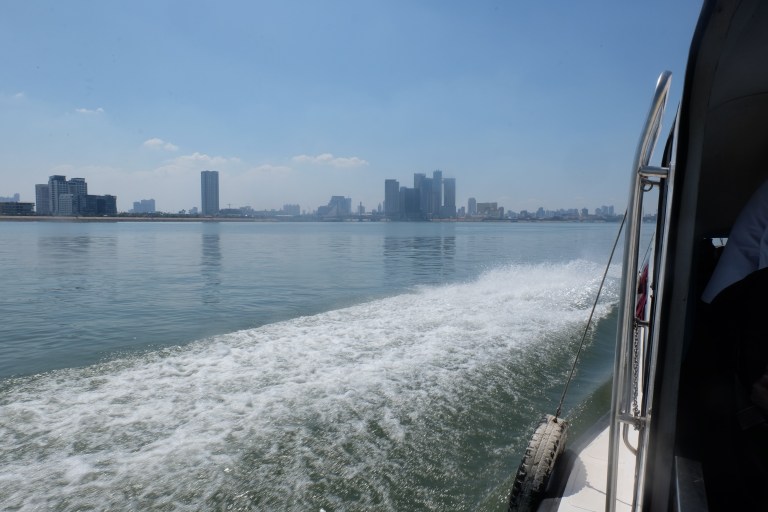
As is usual at all these terminals, be they bus, train or ferry, there are any number of taxi and tuk tuk drivers jostling and hustling to get business from the disembarking passengers. Here, there is an added group of porters, offering to carry your luggage from the pier to the road. Looking up to the road above us, at the top of a steep ramp, it seems that paying to have your bags carried up will be worth every dollar…but not $5. Its only 50 yards uphill!
Trying to gather our bags; telling at least two guys not to touch them; negotiating with a third for a taxi and shouting “one dollar” at the young lad setting off up the ramp with 30 kilos of our combined worldly goods, all the while saying goodbye to newly acquired acquaintances from the boat ride and trying look at Google maps to see where our hotel is located. All at once. Now that’s stress.
…king signal! No internet. A new country and we hadn’t downloaded our eSim for Cambodia.
Even as we are having our bags loaded onto a tuk tuk, other drivers are shouting “Do you want tuk tuk?” Duh!
New country. New currency. I always use the Xe App when travelling. It not only allows me to see the £ exchange rate but all those for the countries that have been added to the list. Thus in Cambodia, I will be able to compare with Vietnam, Laos and Thailand.
Unfortunately, as I said, we had no internet access on arrival and downloading a new eSim was just another task that couldnt be done with the world and his brother hassling us. When the tuk tuk driver had said 30,000 rials for the journey, we had automatically bartered him down to 20,000. We still had no clue as to whether that was good or not but at least it was thirty percent less that he had asked for to begin with. Pat had been a little wary as the driver had accepted her lower offer a bit too keenly.
We asked to stop at an ATM. Here we saw that, unlike Vietnam where the options ran up to VND2,000,000, as standard and generally allowed up to 5 million, roughly the lower amount being £60 and the larger amount translating to around £150, here the options were much lower. Back in Vietnam a 20,000 taxi ride would only be about 60p. Either our hotel was only 150 yards down the road or we might be in for a shock. We duly withdrew 300,000 rials, being the default figure that the on screen options offered. It hadn’t dawned on me that this should be roughly equivalent of the 2 million dong option in Vietnam, (I’m not very clever), but so it proved. We had withdrawn c£60, but more importantly, still unbeknown to us, it was 5,000 rials to the £. I half suspected that we had paid too much as the driver sang and whistled as he weaved between the traffic. No doubt contemplating his cushy retirement. At the hotel, only slightly further than 150 yards away (actually about a mile), we asked the doorman about the exchange rate and on being informed that it was 4 to the US$ we started renegotiating with the smiling tuk tuk driver. After a brief exchange of views we settled on, a still over the top, 15,000 rials or $3. Subsequent tuk tuks to town were always $2 or less. I am aware that none of these amounts are large or going to break the bank but a) you shouldn’t be ripped off and b) it is important that costs reflect the local economy and not your experience of costs at home.
We visited the Royal Palace complex on the following day. This is a collection of royal residential buildings and religious temples.
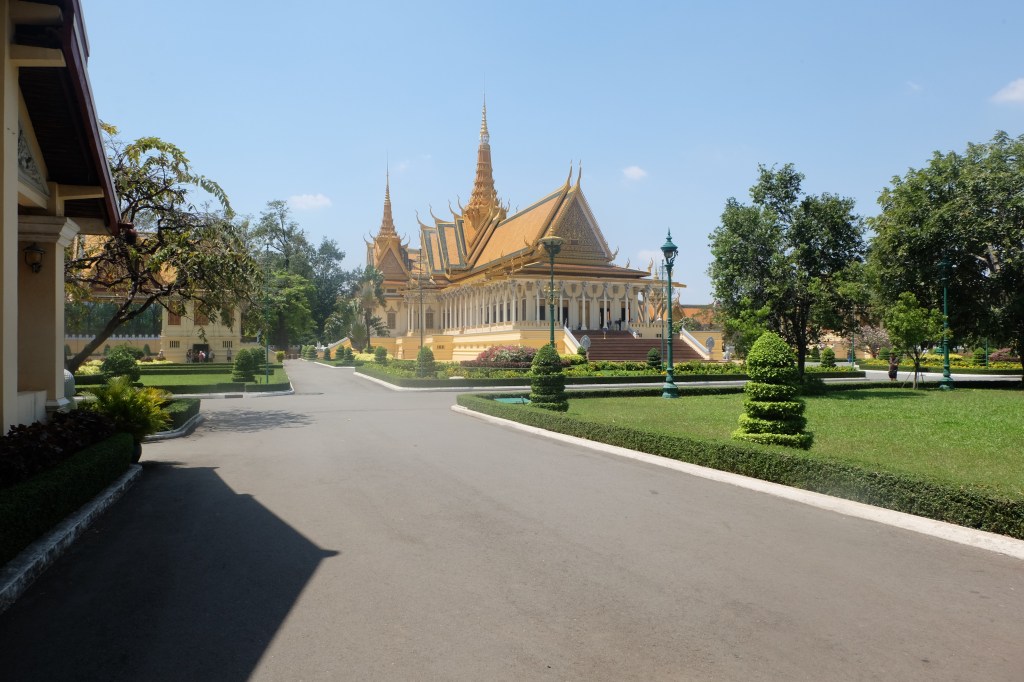
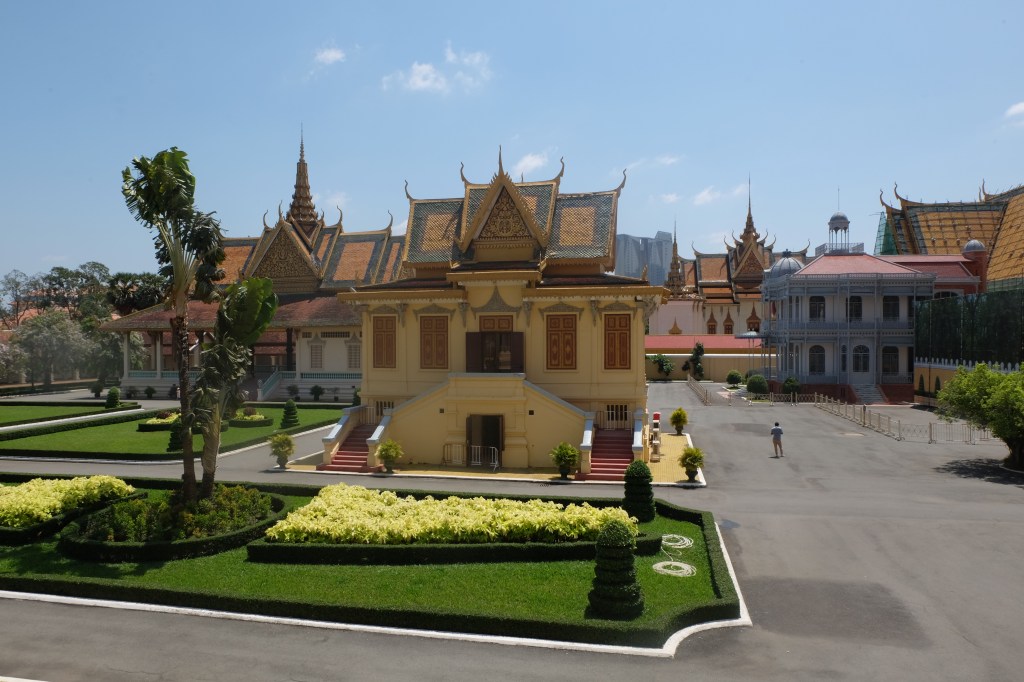
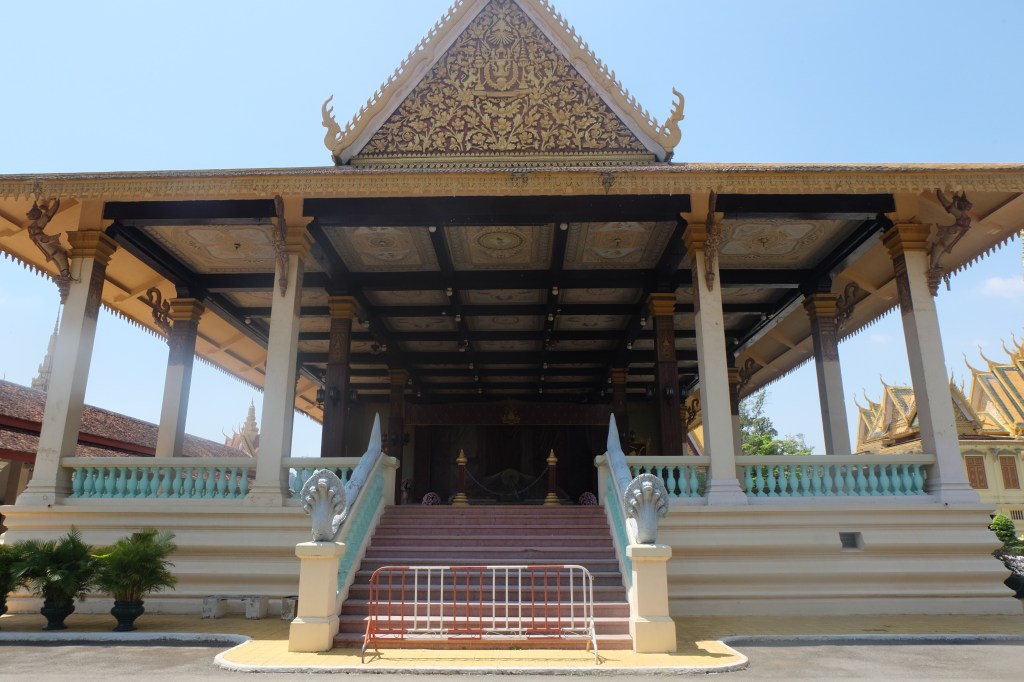
Unfortunately Pat had forgotton to bring her sarong and her wearing shorts was denying us entry due to dress codes for holy sites. Incidentally, the sarong had been purchased at the entrance to a temple in Thailand, where she had also been initially denied entrance. She was now being offered the chance to purchase a new sarong at just 60% of the cost of an entrance ticket! This sarong must have been made with the finest silken threads imported from far away Cathay. But no it was a rag, normally available in the local markets for pennies. We decided to leave the visit until tomorrow, The sarong seller disappeared and we sat forlornly in the heat of the day, contemplating where to go instead. Then we decided we would bite the bullet and buy the overpriced sarong after all and go and see the magnificence of the palace. Alas, there was no sarong seller in sight. We enquired at the ticket desk, to be told that she had gone for lunch. As we turned to go, the man in the ticket booth shouted and as we swivelled, we saw that he was proffering the tickets and requesting the entrance fee. It seems that Buddha lowers his dress code requirements over the lunch period. One to remember for the future.
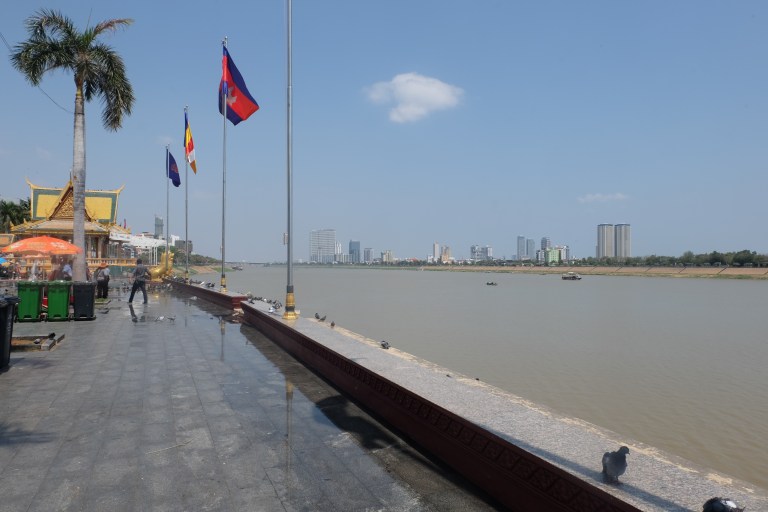
The waterfront area, between the riverside buildings and the river itself, had been developed into a “corniche” walkway and leisure area and as such we had difficulty getting our bearings.
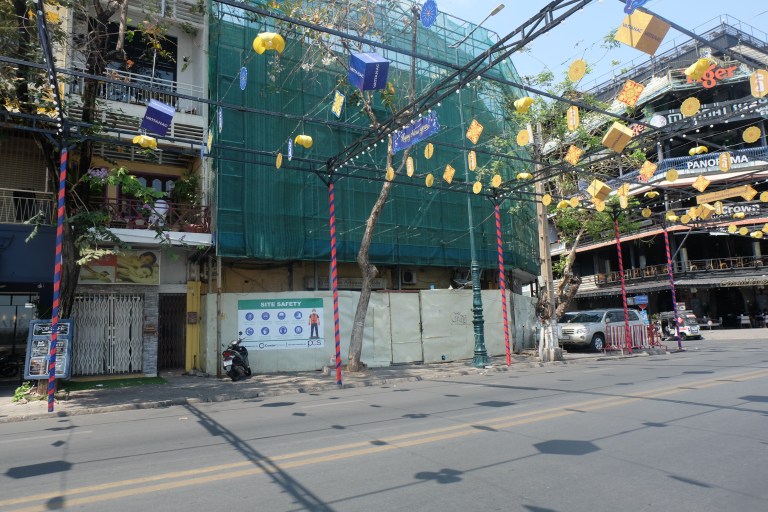
Asking where the Foreign Correspondents Club was located elicited an almost universal response that it no longer existed. The building is, of course, still there and after much walking up and down, we were able to find it, behind the ubiquitous scaffolding, They say, on the boards on the outside, that it is being refurbished, however, conversations, that we had, indicated that nothing had been done to the site since before Covid! The building holds memories of sitting, having lunch on the balcony, in the middle of a tropical storm, with pouring rain, flashes of lightening and sparking of electricity cables.
We had wanted to proceed to Siem Reap and the splendour of Angkor Wat by boat across the Tonle Sap lake, as we had done many years before. However, just like in the song American Pie, “the man there said the band didn’t play” or rather the boat didn’t go any more, despite there being a sign that said otherwise.
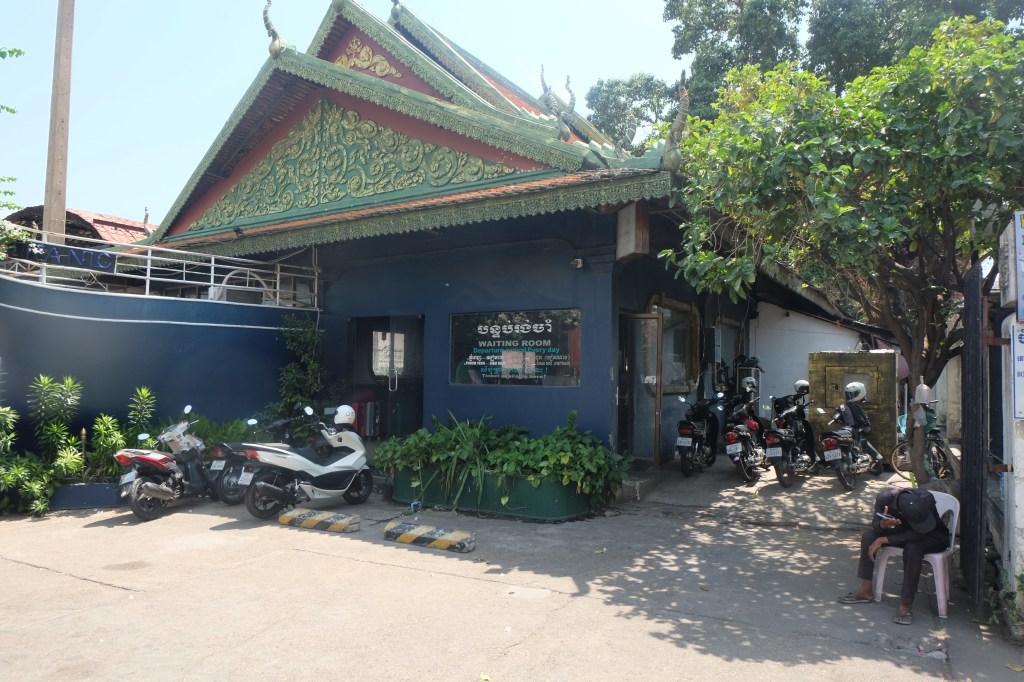
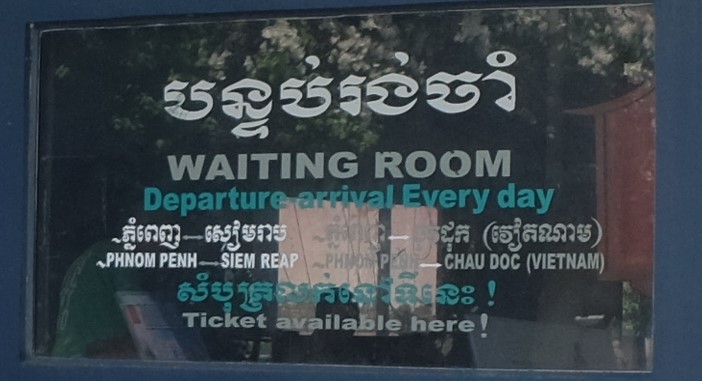
Apparently, the improvements to the road, between the two cities, has made the boat financially unviable. Unintended consequences. It was along that road that we set off the following day.
There are places in the world that have “the wow factor”. The Taj Mahal, Iguazu Falls, Machu Pichu and the Perito Merino Glacier are some that we have been fortunate enough to have seen and in our minds had that “wow” when first encountered. Angkor Wat falls into that category.
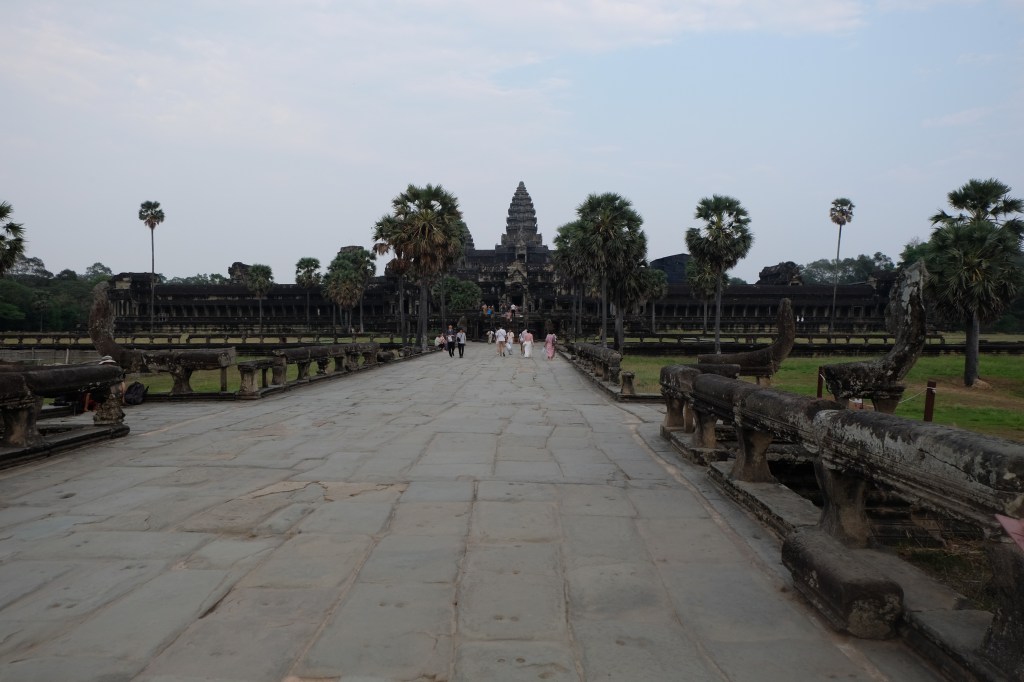
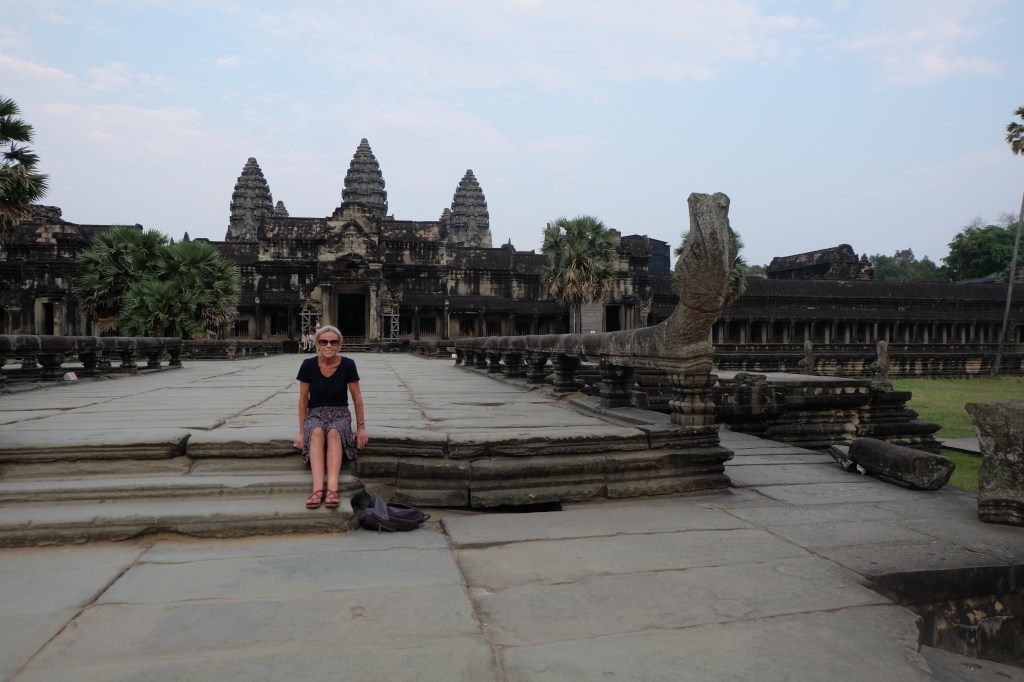
Siem Reap as a town/city has a great vibe. Its “Pub Street” is only two blocks of bars and restaurants and is nowhere near as busy as others in South East Asia, but neither does it have the sleaziness of some. I can recommend the BBQ ribs at The Red Piano, if you are ever there.
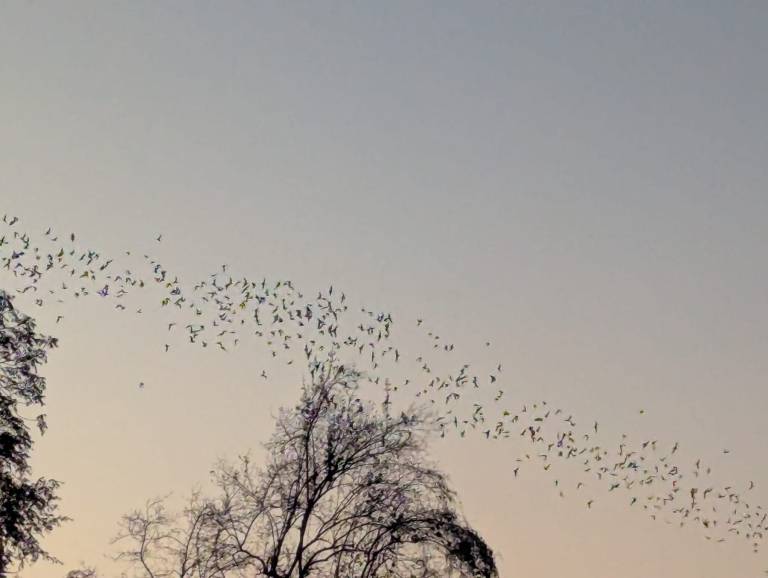
Having travelled to Siem Reap via the road to the East of the lake, we took the westerly route south to Battambang. Here the highlight was to watch the 6 million (six million) bats leaving their cave at sunset to feed in the rice and cornfields.
Unfortunately, while visiting the hilltop temple nearby, I was scratched, on the back of my leg, by a monkey that decided, for no reason, to jump at me. My 2016 rabies vaccination was now out of date, (should have been boosted during Covid), and I therefore decided to go and have an anti rabies jab. As luck would have it, Battambang is home to one of only three specialist Louis Pasteur anti vaccine centres in Cambodia. The doctor there reassured me that it was unlikely that I would have caught rabies from the scratch. However, as it had drawn blood, I should have a course of treatment that would involve 4 jabs over the coming weeks. I explained that we were travelling and he told me to get them done wherever I was at the scheduled time.
It turned out that in addition to The Louis Pasteur Institute in Battambang, I would also have the pleasure of the Cambodian health facilities at the Sonia Kill Memorial Hospital, (I’m not joking) in Kampot and the clinic in the street off Long Set Beach on Ko Rong, in addition to the VNVC ( Vietnam National Vaccine Centre) in Hanoi. I went private, not necessarily out of choice! Four weeks later, as I write this, it appears that I am clear, assuming that the absence of me howling at the moon and not having an aversion to water, are determinative of such a diagnosis.
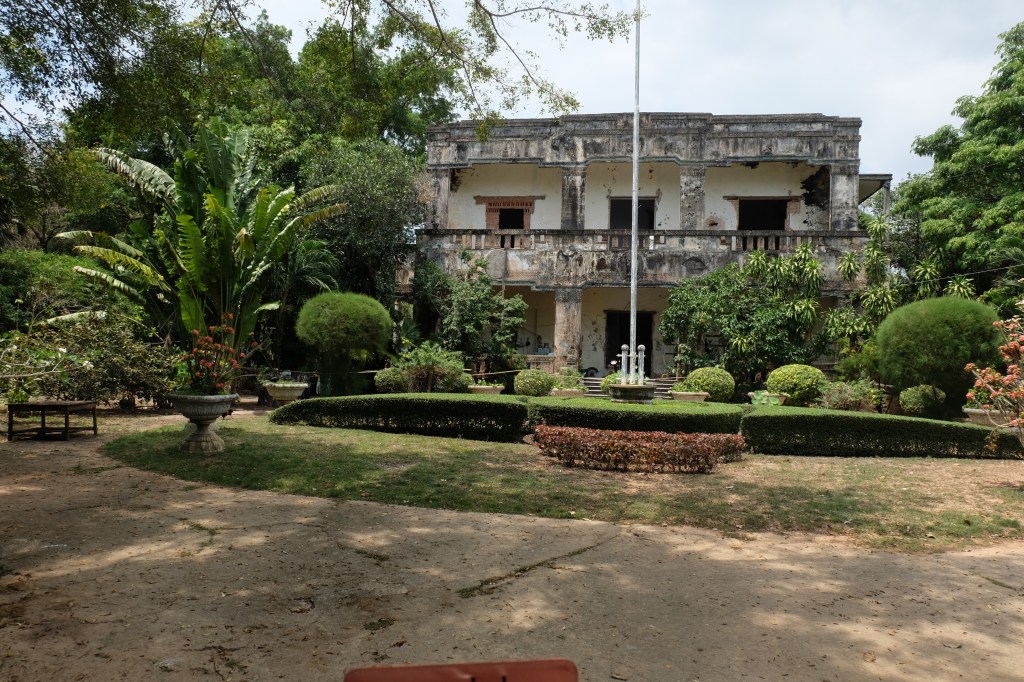
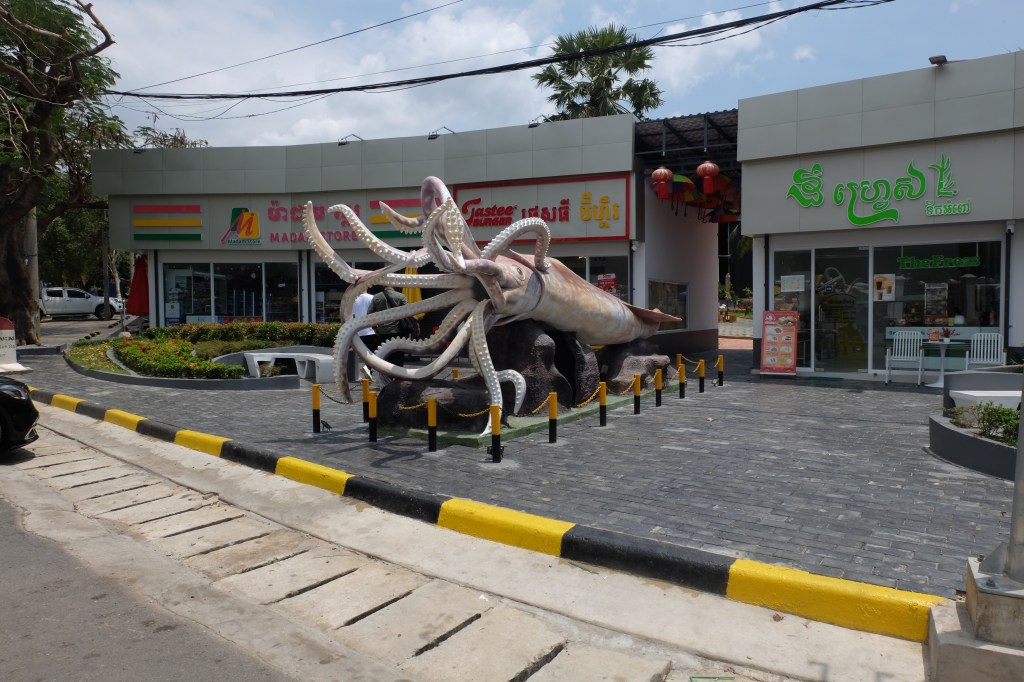
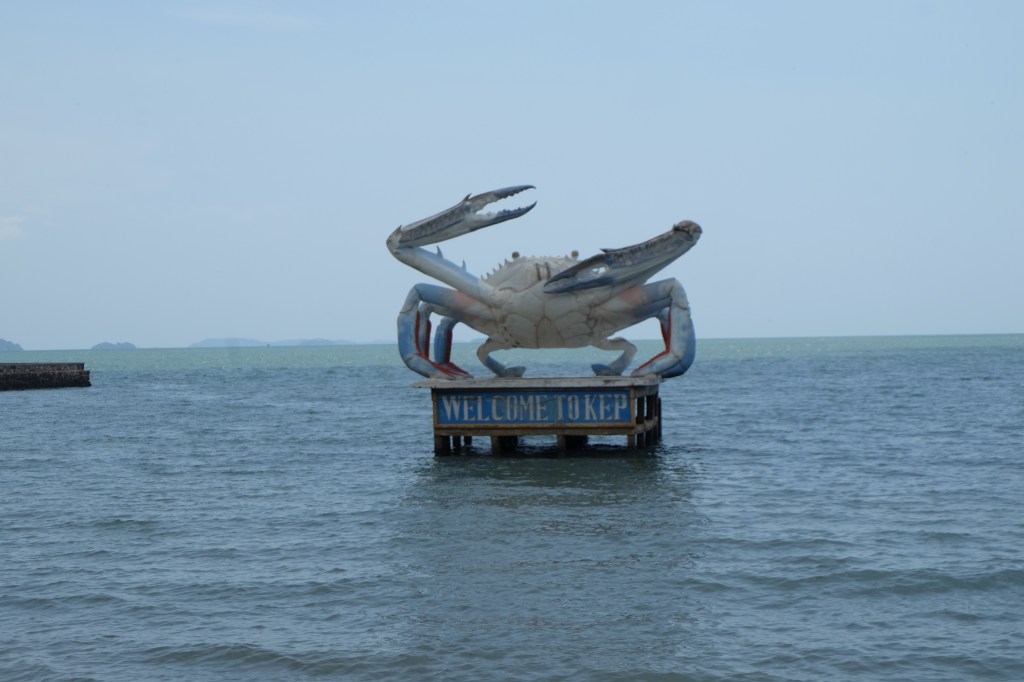
In the south of Cambodia, we stayed in Kep, a small resort town close to its bigger and brasher neighbour, Kampot, home to the inaptly named hospital. It is an unassuming town with an old colonial town centre which has been abandoned and left to decay. A weird sight and site.
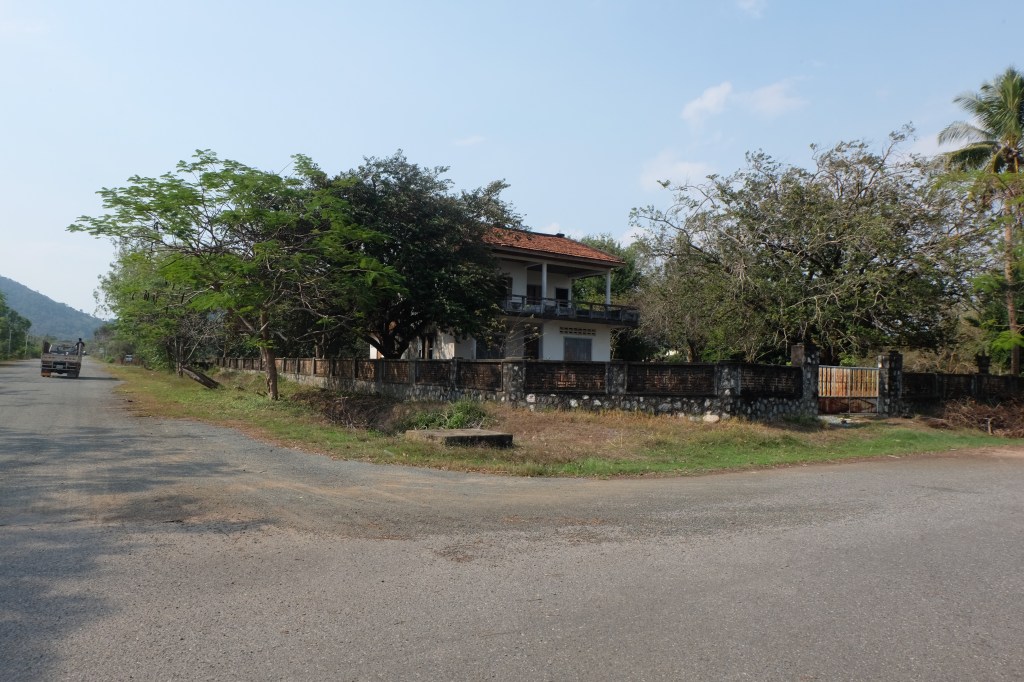
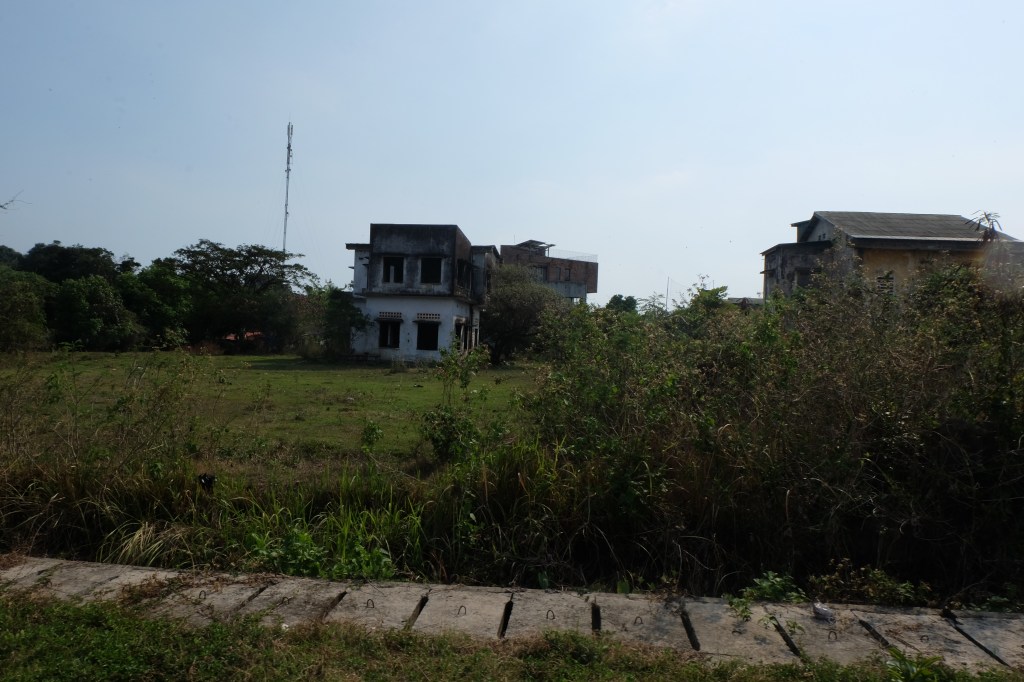
It is home to the pepper growing region (I now know the difference between black pepper and white pepper) and restaurants specialising in dishes using the famous (locally) local crabs.
From Kampot, we were able to get a ferry (high speed catamarran) to Ko Rong, where we were to spend eight days at the beach, to finish our time in Cambodia.
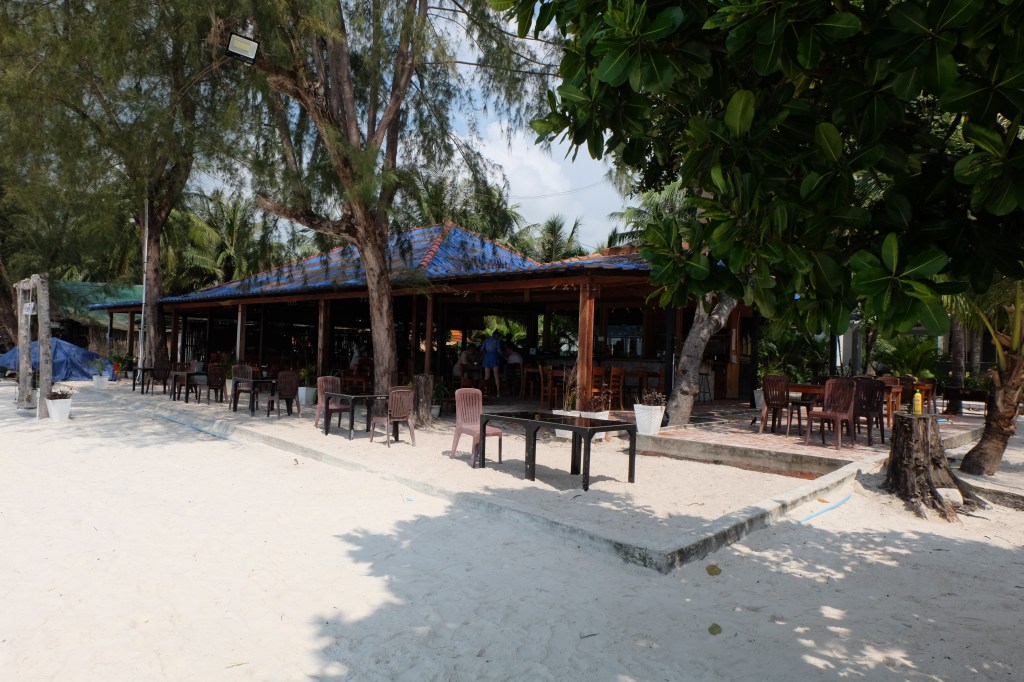
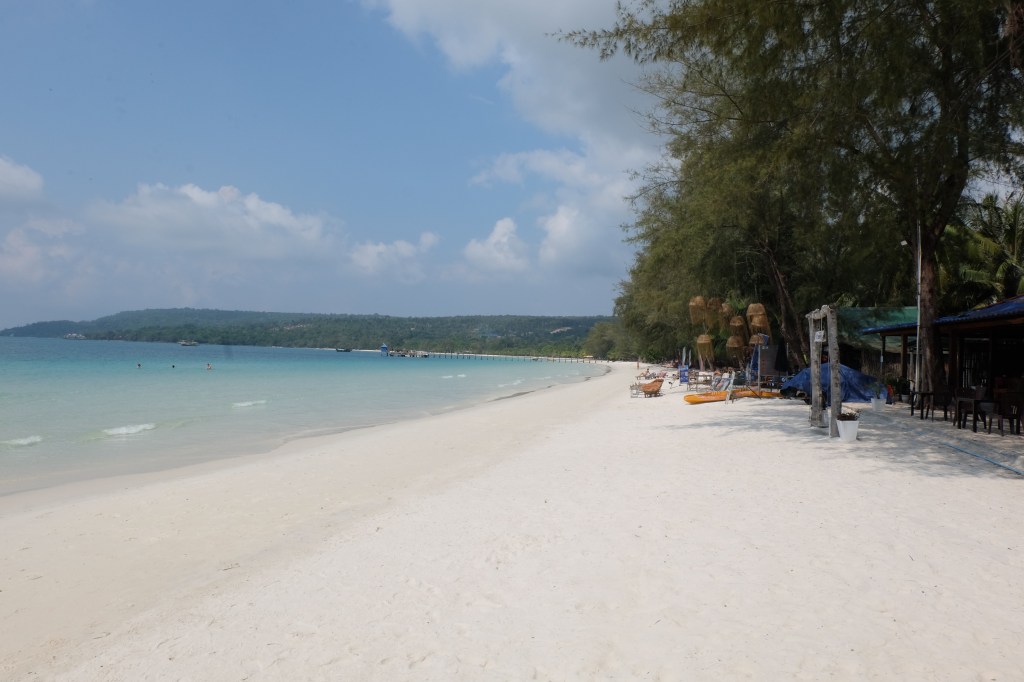
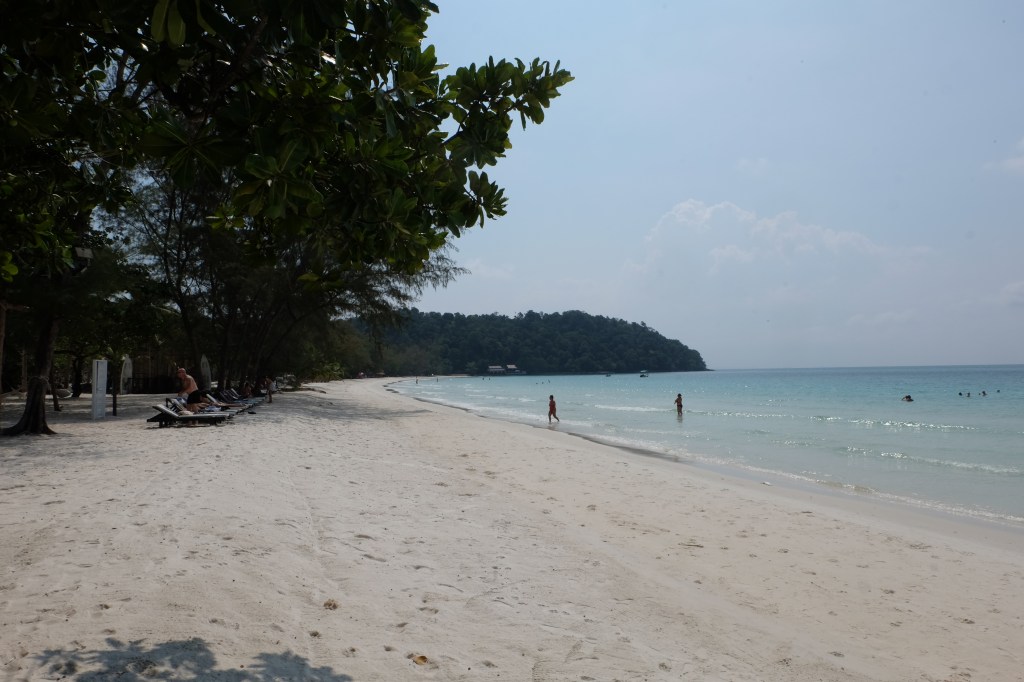
Someone has to do it.
 De Giers on Tour 202 to 2025